

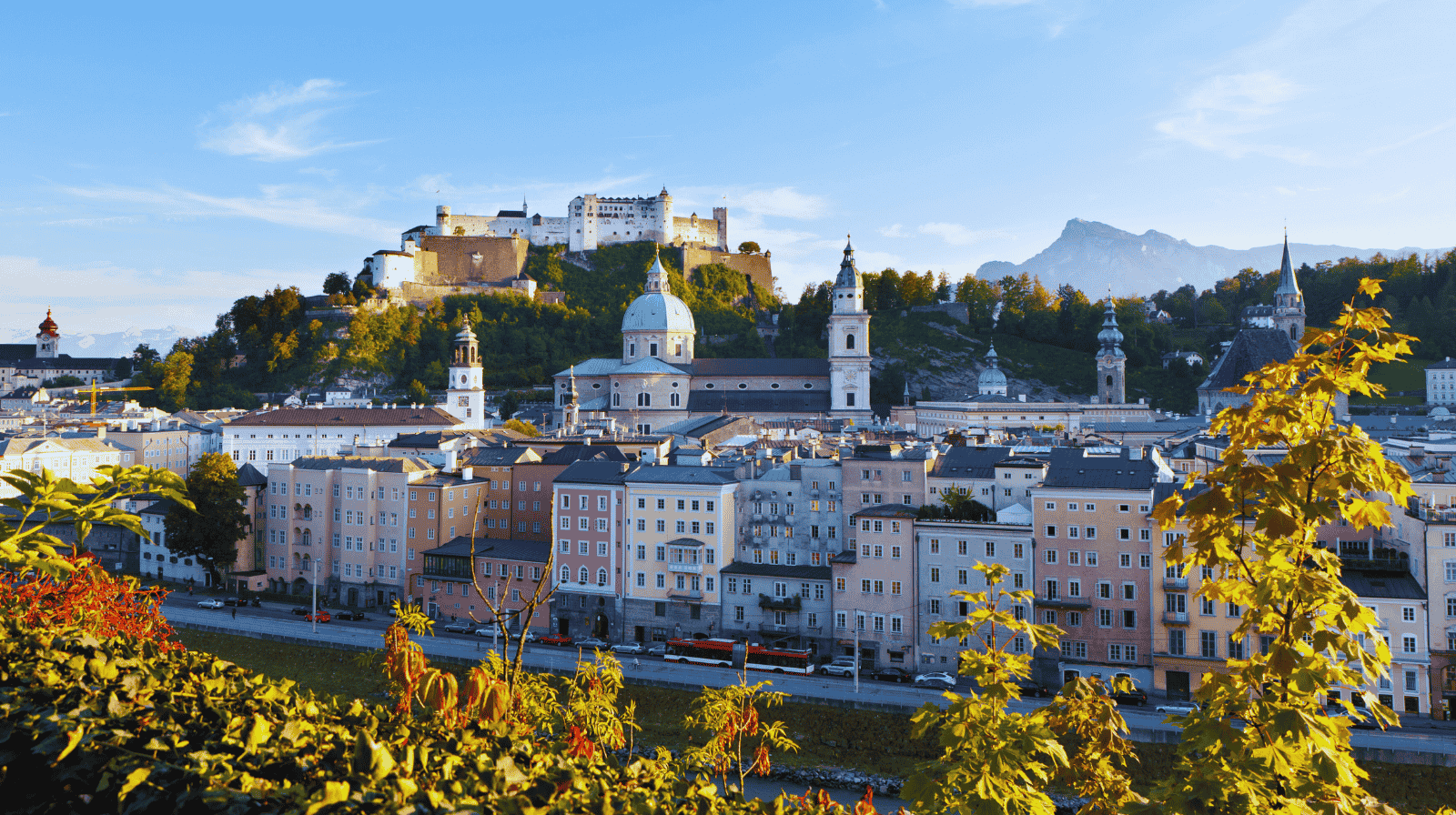
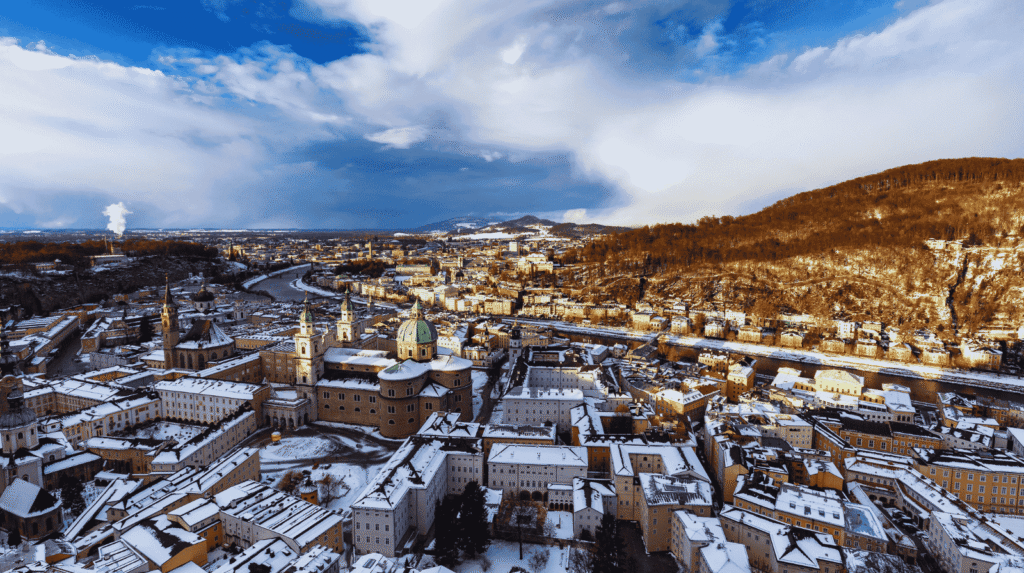
I remember standing on the Makartsteg bridge, adorned with thousands of love locks shimmering under the streetlights. Snow fell softly, creating that special hush that dampens all city sounds. Across the Salzach River, the domes and spires of baroque churches looked sugar-dusted, and above it all, like an ancient, benevolent guardian, watched the mighty Hohensalzburg Fortress. In that moment, through the snowflakes, I heard the faint strains of a violin playing Mozart. That’s the moment. The moment you realize you’re not just in a beautiful city. You are in the heart of music itself.
Welcome to Salzburg. Welcome to Mozart’s city. Welcome to a scene from “The Sound of Music.”
This isn’t just a guide. This is my story of a city that is itself the most beautiful composition, a place where imperial elegance and Baroque splendor blend perfectly with the warmth of Christmas markets and the scent of mulled wine (Glühwein). I’ll take you on a journey through this winter melody of the Alps, reveal the secrets of its palaces, tuck you into the oldest coffee houses, and show you why visiting Salzburg in winter is an unforgettable experience. This is a journey into the heart of European culture, in a city of eternal inspiration.
Why Salzburg in Winter? More Than a City, It’s a Fairytale
Salzburg is beautiful any time of year, but in winter… winter is pure magic.
- A Storybook Atmosphere: Imagine a Baroque city, all stone and splendor, covered in a blanket of snow. Every street, every square looks like a perfect Christmas card. It’s a city that’s naturally photogenic, becoming utterly enchanting in winter.
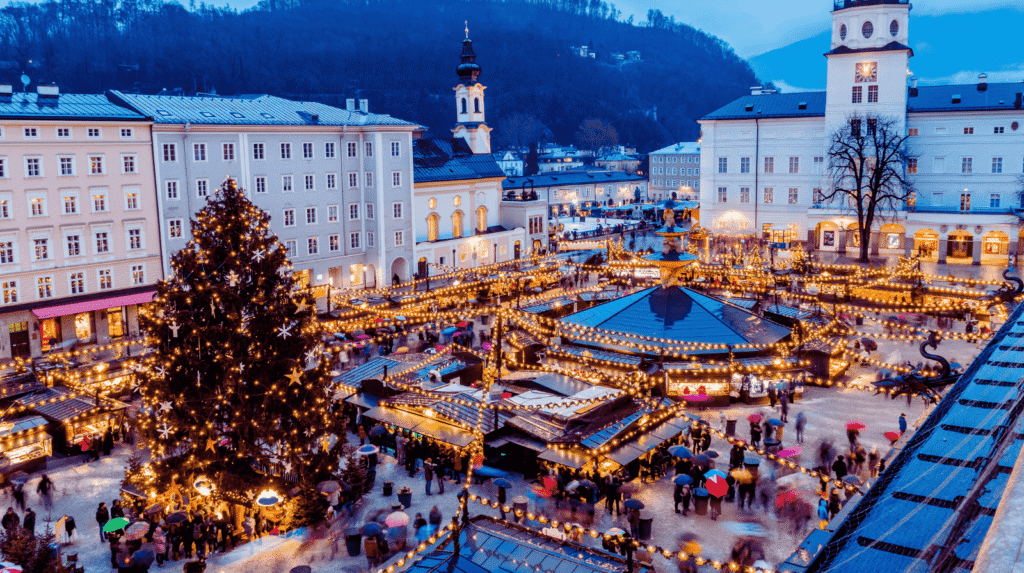
- One of the Oldest Christmas Markets: The Christkindlmarkt on Cathedral Square dates back to the 15th century. Its tradition and authenticity, surrounded by monumental Baroque buildings, create an unparalleled festive atmosphere.
- Music is Everywhere: This is the city of music. In winter, churches and palaces become stages for beautiful Advent concerts. It’s also the birthplace of the world’s most famous Christmas carol, “Silent Night” (Stille Nacht).
- Cozy Gemütlichkeit Atmosphere: Gemütlichkeit is a German word for a feeling of warmth, comfort, and friendliness. There’s nothing better than escaping the cold into a historic coffee house or restaurant with hot chocolate or a steaming bowl of beef soup.
- Fewer Crowds, More Charm: Outside the peak Christmas market period, winter offers a calmer atmosphere than summer. You can explore museums and palaces without jostling through crowds.
The Story of Salt, Princes & a Musical Genius
The name Salzburg literally means “Salt Fortress.” The city and the entire region built their immense wealth and power on the mining and trade of salt from nearby mines – the “white gold” of the Middle Ages.
What makes Salzburg unique is that for centuries, it wasn’t part of Austria but an independent ecclesiastical state ruled by powerful and wealthy Prince-Archbishops. Inspired by Rome, they aimed to turn their city into the “Rome of the North,” hiring the best Italian architects and artists to build grandiose cathedrals, palaces, and fountains in lavish Baroque style. The entire Old Town is their legacy.
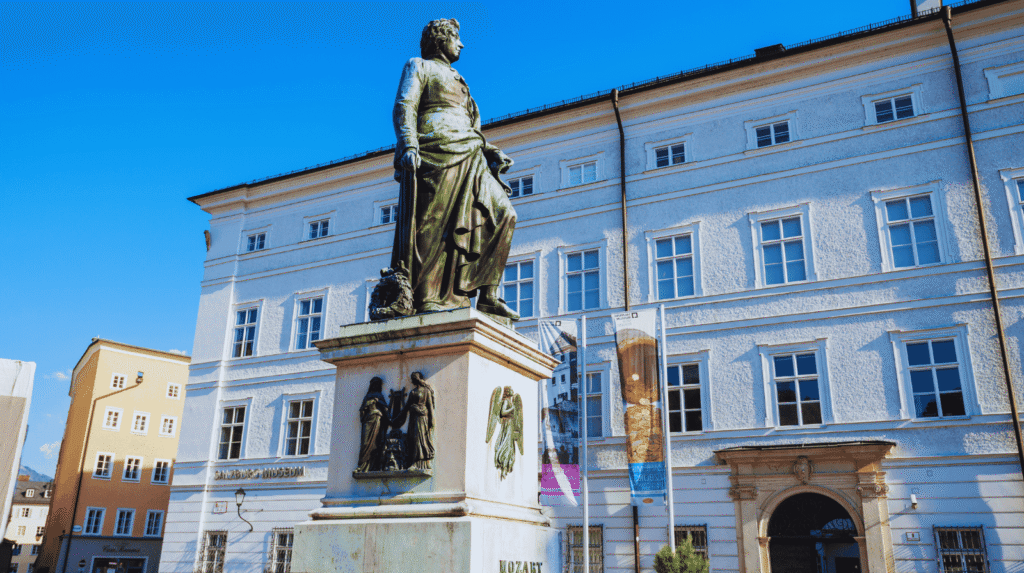
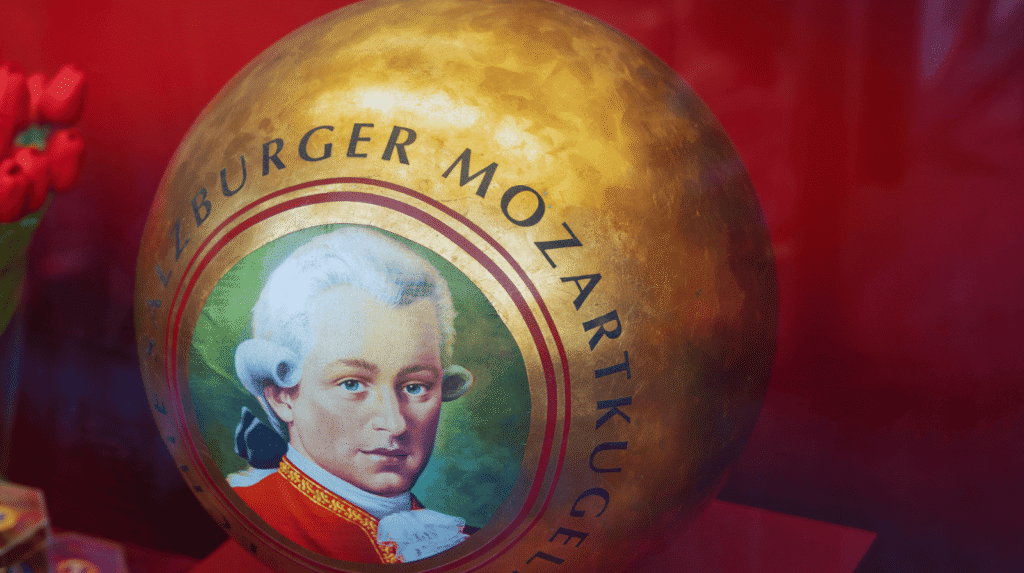
Of course, Salzburg’s story is inseparable from its most famous son, Wolfgang Amadeus Mozart. Born here in 1756, his spirit is present everywhere today – from his birthplace, through the Mozartkugel chocolates, to the music that fills the air.
In the 20th century, the city gained new global fame thanks to the movie “The Sound of Music,” filmed on location here, which still draws millions of fans.
Practical Guide to a Baroque Dream
Arrival & First Steps
- Getting There: W. A. Mozart Airport (SZG) is just a 15-minute bus ride from the city center. Salzburg is also perfectly connected by train to Vienna, Munich, and the rest of Europe.
- The Salzburg Card: My #1 Tip! Buy the Salzburg Card for 24, 48, or 72 hours. I know it seems pricey initially, but trust me, it pays for itself multiple times over. It gives you free entry to ALL museums and attractions (including the fortress, Mozart’s houses) and free public transport. It provides complete freedom and saves a ton of money. Get it!
Getting Around
- Walking is King: The Old Town (Altstadt) is a UNESCO World Heritage site and largely pedestrianized. All major sights are within easy walking distance.
- Buses: An efficient bus system (included in the Salzburg Card) easily takes you to further locations like Hellbrunn Palace.
The Altstadt (Old Town): A Walk Through a UNESCO Fairytale
This is the heart of the city, a labyrinth of narrow streets and beautiful squares.
1. Getreidegasse Street
- The Experience: Salzburg’s most famous and charming street. What makes it special are the beautiful, ornate wrought-iron guild signs hanging above the shops. Even McDonald’s has an elegant sign here! The street is always lively and full of shops.
- Mozart’s Birthplace (Mozarts Geburtshaus): In the bright yellow building at No. 9, Mozart was born. It’s now a museum where you can see the rooms of his childhood and some of his first instruments. (Free with Salzburg Card).
2. The Squares & The Cathedral
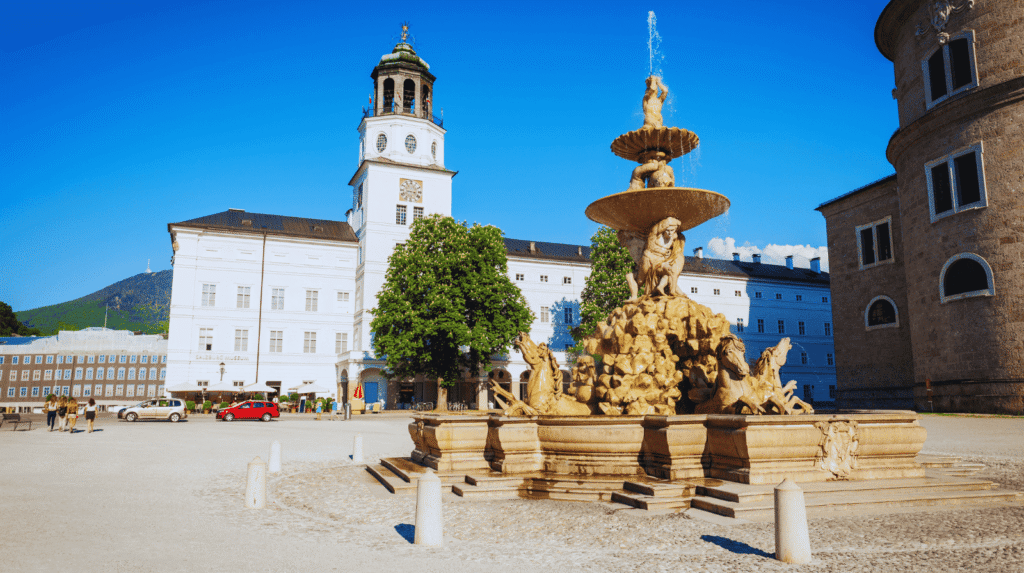
- Residenzplatz: A huge, grandiose square with a beautiful fountain, flanked by the Old and New Residences of the Prince-Archbishops. The main Christmas market is held here.
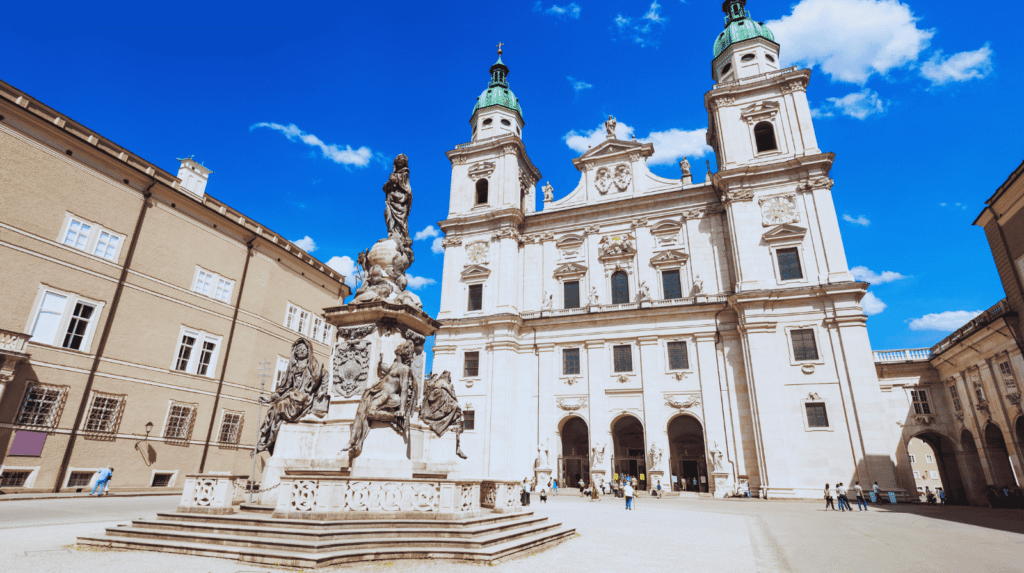
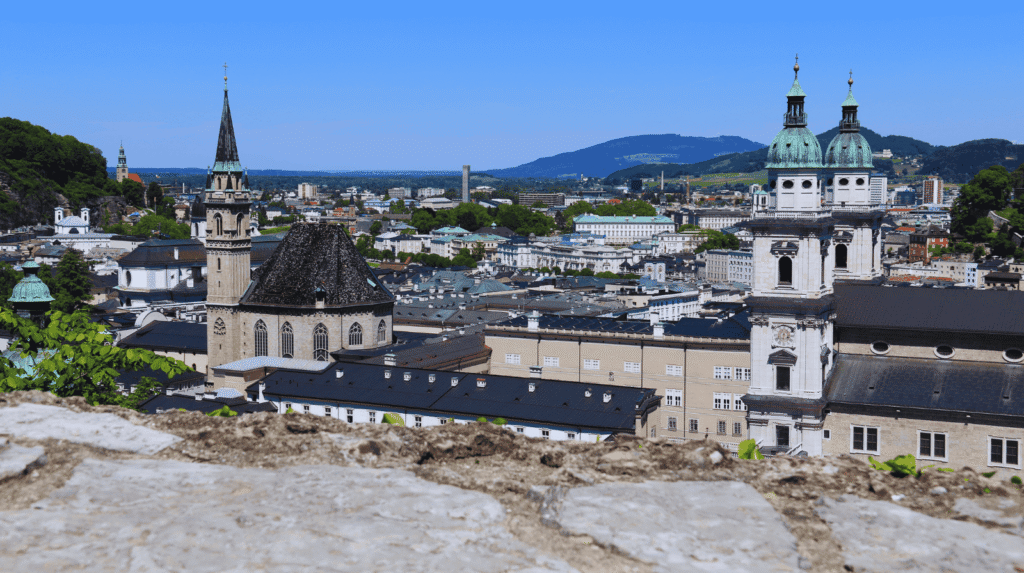
- Salzburg Cathedral (Dom): A magnificent Baroque cathedral with impressive domes. Step inside to see the organ and the font where Mozart was baptized.
- Kapitelplatz: A square known for the giant golden sphere with a figure on top (Sphaera) and a large chessboard. Great views of the fortress from here.
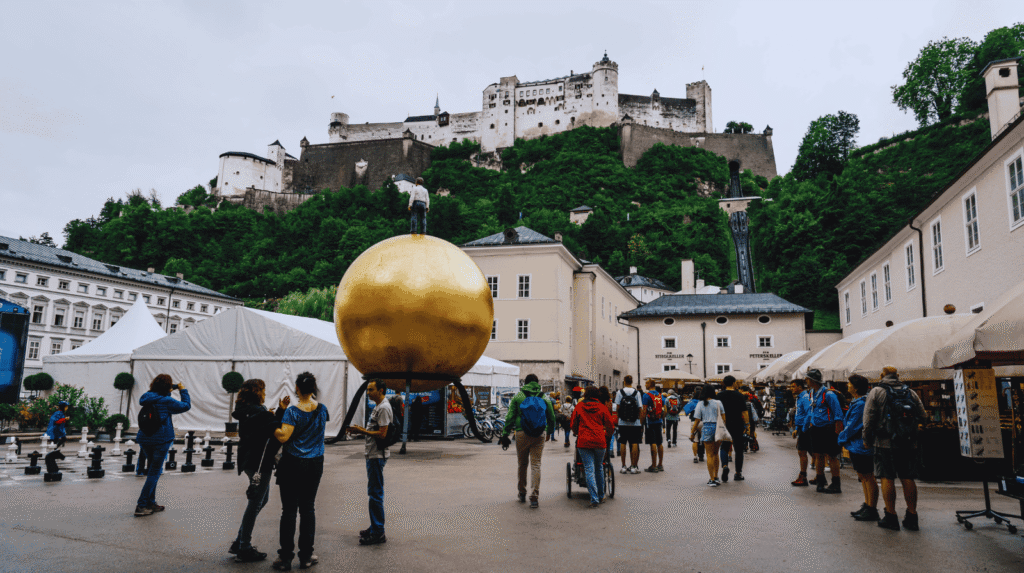
3. Hohensalzburg Fortress
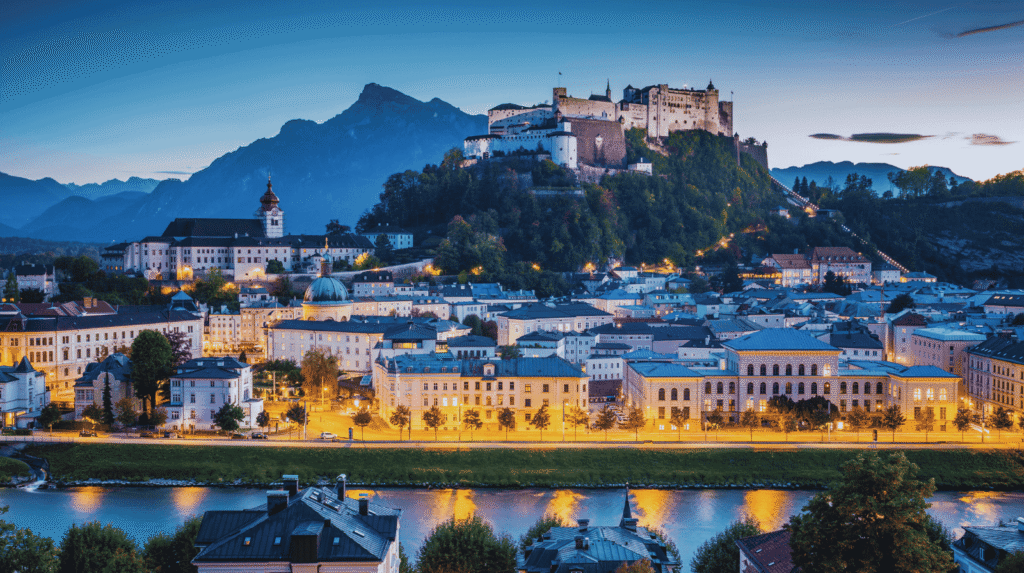
- The Experience: The “Stone Guardian” dominates Salzburg from Festungsberg hill. Reach the top via a short funicular ride (Festungsbahn, free with Salzburg Card) or a steep walk.
- The View: Trust me, the view from the ramparts is absolutely spectacular. You see the entire Old Town, the river, and the snow-capped Alps in the distance.
- What’s Inside? You can visit the medieval state rooms, a fortress museum, and a marionette museum. (All free with Salzburg Card).
Across the River: Mirabell & The Right Bank
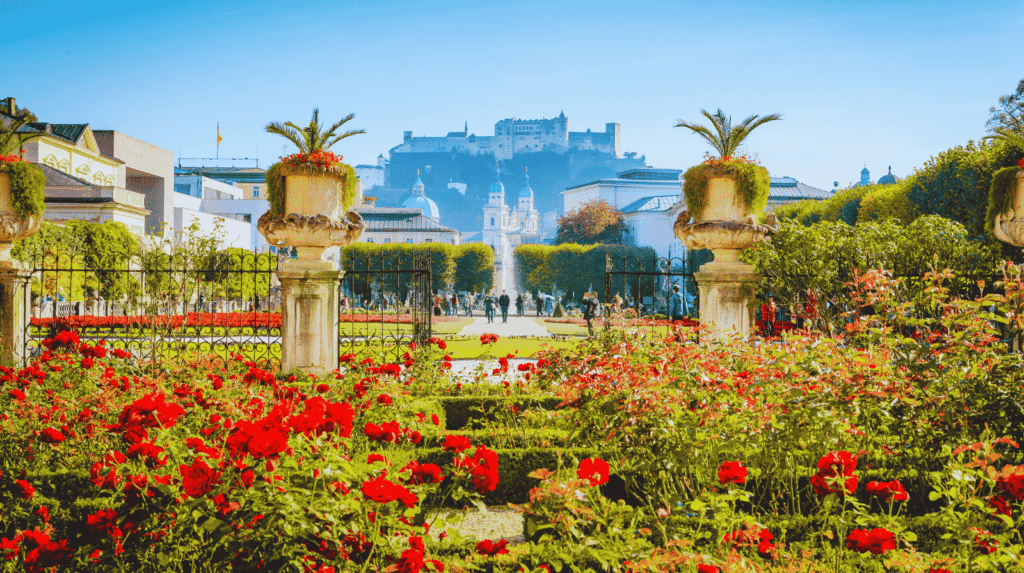
Mirabell Palace and Gardens
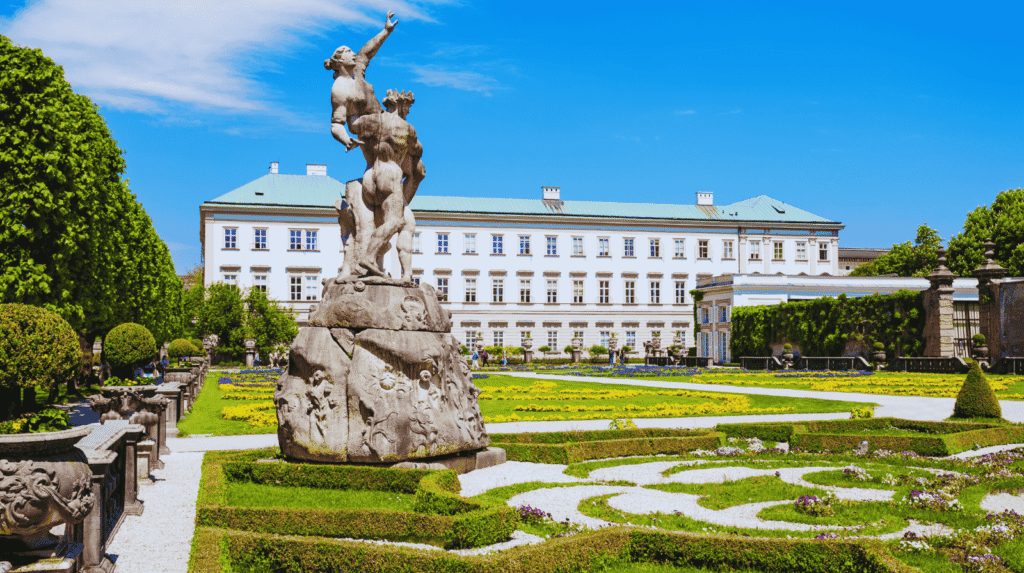
- What it is: A beautiful palace with even more beautiful Baroque gardens.
- “The Sound of Music”: One of the most famous locations from the movie! Maria and the von Trapp children sang “Do-Re-Mi” here, dancing around the Pegasus Fountain and on the steps. Even in winter, the gardens are lovely and offer perfect postcard views of the fortress.
Mozart Residence (Mozart-Wohnhaus) The house where Mozart lived as an adult before moving to Vienna. Also a museum, focusing on his family life. (Free with Salzburg Card).
Winter Melody: Christmas, “Silent Night” & Music
- Christmas Markets: Besides the main market on Cathedral Square, visit the smaller, charming market in front of Mirabell Palace. Sip Glühwein, nibble roasted almonds, and soak up the festive cheer.
- “Silent Night” (Stille Nacht): The world’s most beloved Christmas carol originated in the village of Oberndorf, just 20 km from Salzburg. You can visit the small Silent Night Chapel, standing where the song was first performed in 1818. It makes for a beautiful half-day trip (easily reachable by local train/bus).
- Advent Concerts: During Advent, Salzburg’s churches and palaces host beautiful concerts featuring classical music and choirs. The perfect way to embrace the festive spirit.
“The Hills Are Alive”: In Search of The Sound of Music
For fans of the movie, Salzburg is a dream come true. You can join popular bus tours hitting all the key filming locations in the city and the stunning Salzkammergut lake region. Or, explore the city locations yourself: Mirabell Gardens, St. Peter’s Cemetery, Nonnberg Abbey…
Salzburg Delights: Mozart Balls & Coffee House Culture
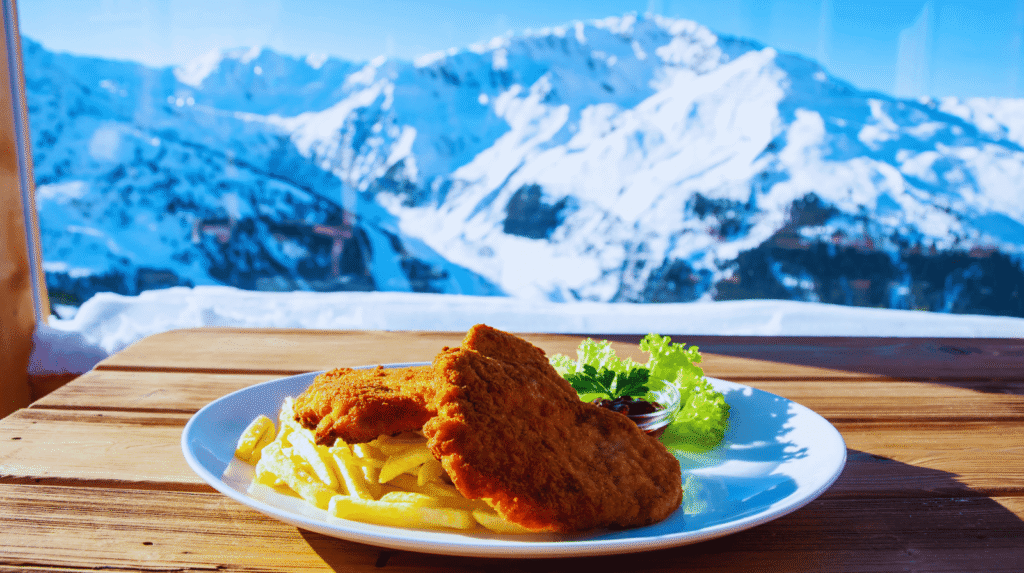
- The Food: You must try Wiener Schnitzel (just as good here as in Vienna) and the local specialty, Bosna – a spicy sausage in a bun with onions and spices, found at small stands in the Old Town. Hearty Austrian food is perfect for winter.
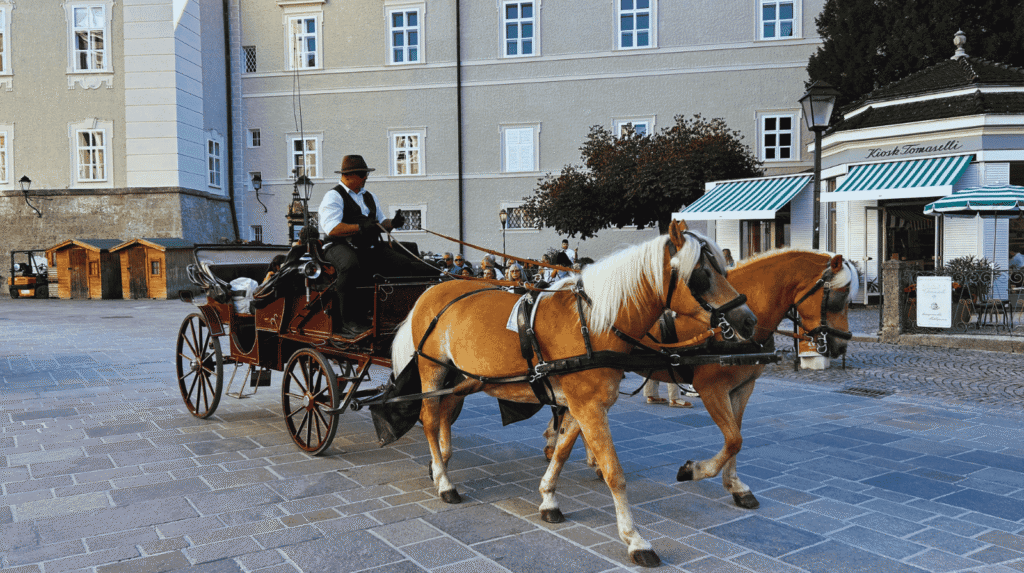
- Coffee Houses: Salzburg has a long tradition. Café Tomaselli is the oldest, dating back to 1700. Café Fürst is also a must-visit.
- The Original Mozartkugel: My tip: Forget the red-and-gold wrapped Mozart balls from supermarkets. The original, handmade Mozartkugel is made only by the Fürst confectionary, wrapped in silver-and-blue foil. It consists of pistachio marzipan, surrounded by nougat, and coated in dark chocolate. The difference in taste is immense. Buy them only at Fürst shops in Salzburg!
Excursions into Alpine Idyll
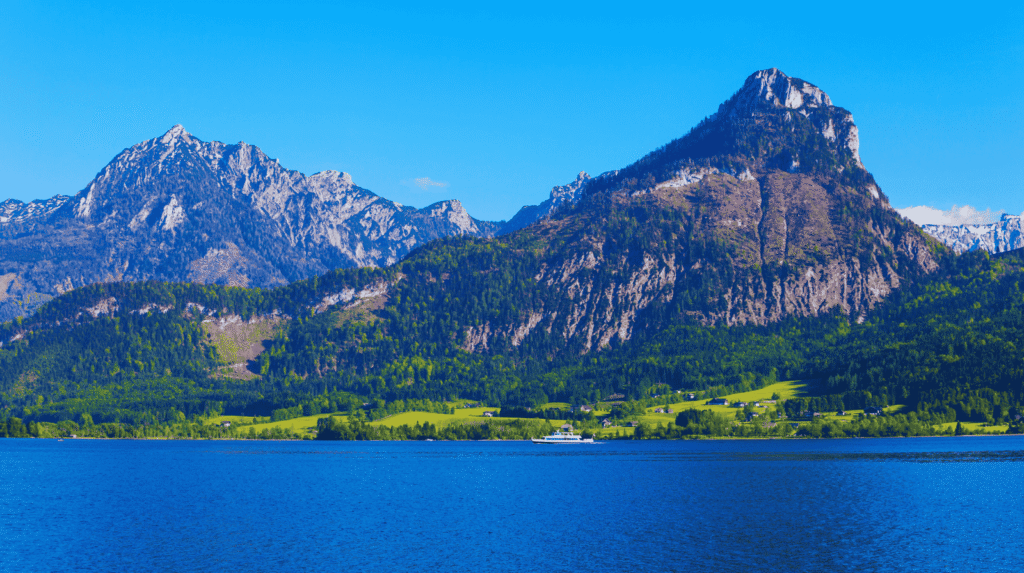
- Salzkammergut (Lake District): Just an hour’s drive away lies one of Austria’s most beautiful regions. Visit the stunning Lake Wolfgangsee and the charming towns of St. Gilgen and St. Wolfgang, often decked out for Christmas.
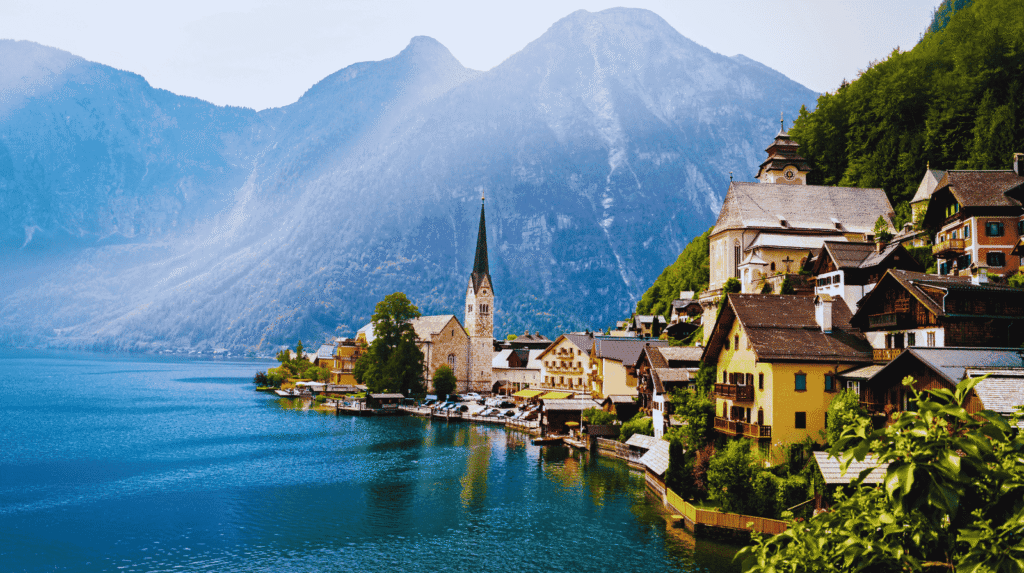
- Hallstatt: Arguably Austria’s most photographed village. In winter, covered in snow, it looks like something out of a fairytale. A popular but worthwhile full-day trip.
Planning Your Winter Dream
- Option 1: Salzburg Winter Fairytale (Long Weekend – 4 Days)
- Day 1: Arrive. Walk through the Old Town, visit Mozart’s Birthplace. Evening at the Cathedral Square Christmas Market.
- Day 2: Morning ascent to Hohensalzburg Fortress. Afternoon exploring Mirabell Palace and Gardens. Perhaps an Advent concert in the evening.
- Day 3: Half-day trip to Oberndorf (Silent Night Chapel). Afternoon relaxing in a traditional coffee house like Tomaselli or Fürst.
- Day 4: Last stroll, buy original Mozartkugel, depart.
- Option 2: Salzburg & The Lakes (6 Days)
- Days 1-3: Follow the “Winter Fairytale” plan.
- Day 4: Full-day trip to Hallstatt (check road/train conditions in winter).
- Day 5: Explore Lake Wolfgangsee, visiting St. Gilgen and St. Wolfgang. Enjoy the lakeside winter atmosphere.
- Day 6: Relaxing day in Salzburg before departure.
Conclusion: A Melody That Stays With You
You will leave Salzburg with a melody in your heart. Maybe it will be one of Mozart’s sonatas, maybe “Do-Re-Mi” from the movie, or perhaps just the quiet, joyful jingle of Christmas bells.
It’s a city that is music itself – a perfect composition of Baroque elegance, Alpine beauty, and a warm, human soul. Its winter magic isn’t just in the snow and lights; it’s in the feeling of stepping into a world where beauty is timeless. And that’s a melody you’ll want to return to, again and again, just like I do.