


Close your eyes and imagine. The buzz of scooters echoing off cobblestone streets. The scent of fresh espresso and pastries wafting from tiny bars. The golden sunlight illuminating ancient ruins and Baroque fountains. That is Rome. The Eternal City. An open-air museum pulsing with life in every corner.
Now, open your eyes and imagine a different scene. Rivers of people. Endless queues stretching for hundreds of meters in front of the Colosseum. The frustration as you watch the precious minutes of your perfect weekend vanish into a sea of selfie sticks.
Sound familiar? Unfortunately, for many, this is the reality of visiting Rome. But it doesn’t have to be.
What if I told you it’s possible to experience all the magic of Rome, see its most glorious sights, and feel the authentic la dolce vita spirit in just 48 hours-without spending a single minute waiting in line for tickets? It is possible. All it takes is a bit of smart planning and a few “insider” tricks.
This isn’t just another itinerary. This is your strategy for conquering Rome. Your game plan to outsmart the crowds. Get ready to save this guide, because you’re going to want to share it with everyone you know. Let’s go!
Before You Go: The Golden Rules for a Stress-Free Rome
The success of your “48 hours in Rome” mission doesn’t start at Fiumicino Airport; it starts right now, as you read this. Preparation is 90% of the battle.
1. Online Tickets Are Your Holy Grail
Repeat after me: “I will never, ever wait in line to buy a ticket on the spot.” This is the single most important rule. In the 21st century, waiting in a ticket line is a choice, and you are choosing to be smarter.
- Colosseum, Roman Forum & Palatine Hill: These three sites are visited with a single, combined ticket. Buy it exclusively online via the official website (CoopCulture) or trusted platforms like GetYourGuide or Tiqets. When purchasing, you will select an exact date and entry time for the Colosseum. Once inside, you can stay as long as you like, and you have 24 hours to visit the Forum and Palatine Hill.
- Vatican Museums & Sistine Chapel: The ticket line here is perhaps the most infamous in the world, often lasting 3-4 hours. By buying your ticket online via the official Vatican website, you choose your exact time slot, pay a small online booking fee (around €4), and enter through a separate, fast-track entrance. That €4 will be the best money you spend on your entire trip.
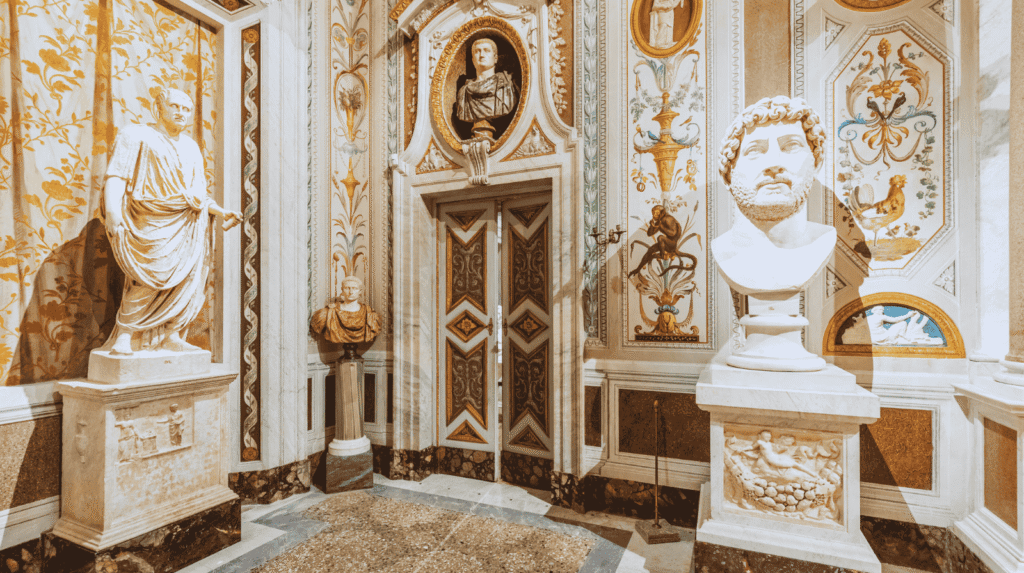
- Borghese Gallery (Galleria Borghese): For this beautiful gallery featuring masterpieces by Bernini and Caravaggio, reservations are mandatory. You cannot just show up. Book weeks, or even months, in advance.
2. Roma Pass or Single Tickets? The Eternal Dilemma.
The Roma Pass is a popular tourist card, but is it right for you? Let’s break it down.
- Roma Pass (48h or 72h):
- What it offers (48h version): One free entry to a museum or archaeological site of your choice (everyone picks the Colosseum/Forum as it’s the most expensive), discounts on all other listed museums, and unlimited public transport (bus, tram, metro) for 48 hours.
- Who it’s for: Those who plan to use public transport intensively and visit at least one other museum from the list besides the Colosseum. Do the math: price of Roma Pass vs. (price of Colosseum ticket + cost of transport tickets + price of a second discounted ticket).
- IMPORTANT NOTE: Even with a Roma Pass, you must reserve your Colosseum time slot online! This is mandatory and costs €2 per person. The pass does not grant you the right to skip the line without a reservation.
- Single Tickets:
- Who it’s for: Those who plan to walk a lot (and Rome is made for walking!) and, besides the Colosseum and the Vatican (which is not included in the Roma Pass), mainly want to visit free attractions. This option is often more cost-effective.
The Verdict: For a hyper-efficient 48-hour plan where walking is key, buying individual online tickets for the Colosseum and the Vatican is often the better and simpler option.
3. Timing is Everything: When to Visit the Attractions
- Early Morning or Late Afternoon: This is the golden rule for everything, even free sites. The Trevi Fountain is magical at 7 AM without the thousands of people. The Pantheon is serene as soon as it opens.
- Avoid the First Sunday of the Month: Many state museums in Italy are free on the first Sunday of the month. This sounds great, but in reality, it means absolute chaos and crowds you want to avoid.
- Choose the “Shoulder Season”: If you can, visit Rome in April, May, September, or October. The weather is beautiful, and the crowds are more manageable than during the summer months.
4. Logistics: Accommodation, Packing, and Apps
- Accommodation: Choose a central location. The areas around the Pantheon, Piazza Navona, or Campo de’ Fiori are ideal as everything is within walking distance. Trastevere is charming and bohemian, while Monti is hip and full of great bars. Termini is practical for transport but less authentic.
- Packing: The most comfortable shoes you own. I cannot stress this enough. You will be walking 15-20 kilometers a day. Also, bring a portable battery (power bank) and a reusable water bottle—Rome has over 2,500 public drinking fountains, called nasoni.
- Apps: Google Maps (for walking and public transport navigation), TheFork (for restaurant reservations), FreeNow/Uber (for taxis).
Your Game Plan: 48 Hours in the Eternal City
This itinerary is designed to be logical, geographically grouped, and to maximize your time. Ready?
DAY 1: Imperial Power & Baroque Splendor (Approx. 18,000 steps)
Morning (8:30 AM – 1:00 PM): A Dive into Ancient Rome Our first day begins where it all started: in the heart of the Roman Empire.
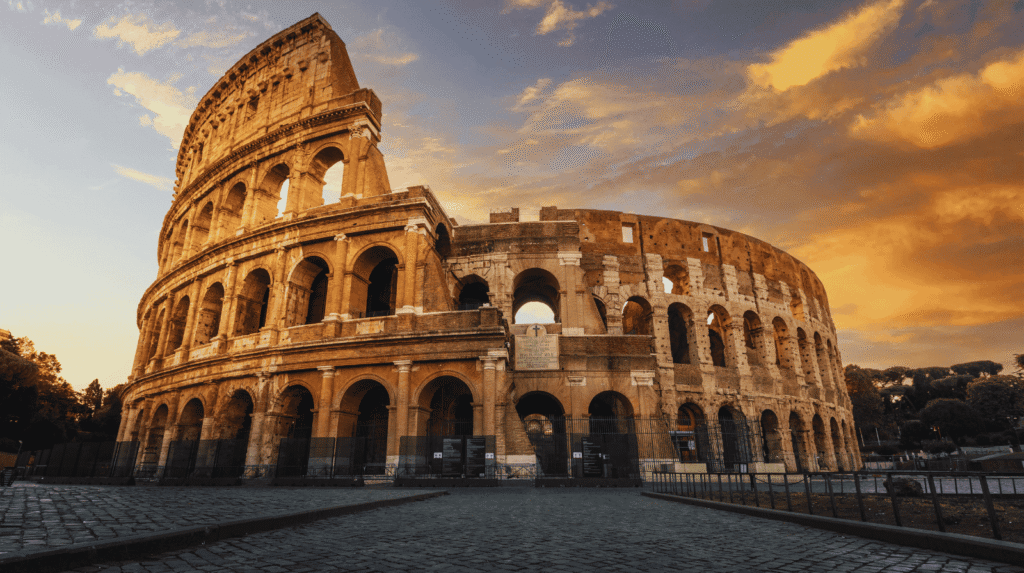
- Location 1: The Colosseum
- What it is: The largest amphitheater ever built, a symbol of the power and cruelty of the Roman Empire.
- Why visit: To feel the breath of history is an understatement. Standing inside is an experience that transports you back almost 2,000 years.
- KEY QUEUE-SKIPPER TIP: As mentioned, buy your “Full Experience” ticket online weeks in advance. Choose the earliest possible time slot (e.g., 8:30 or 9:00 AM). You’ll arrive before the large tour groups, and the morning light is perfect for photos. You’ll use a dedicated entrance for reservations and walk right past the already-forming queue. The feeling is priceless.
- Visit time: 1.5 – 2 hours.
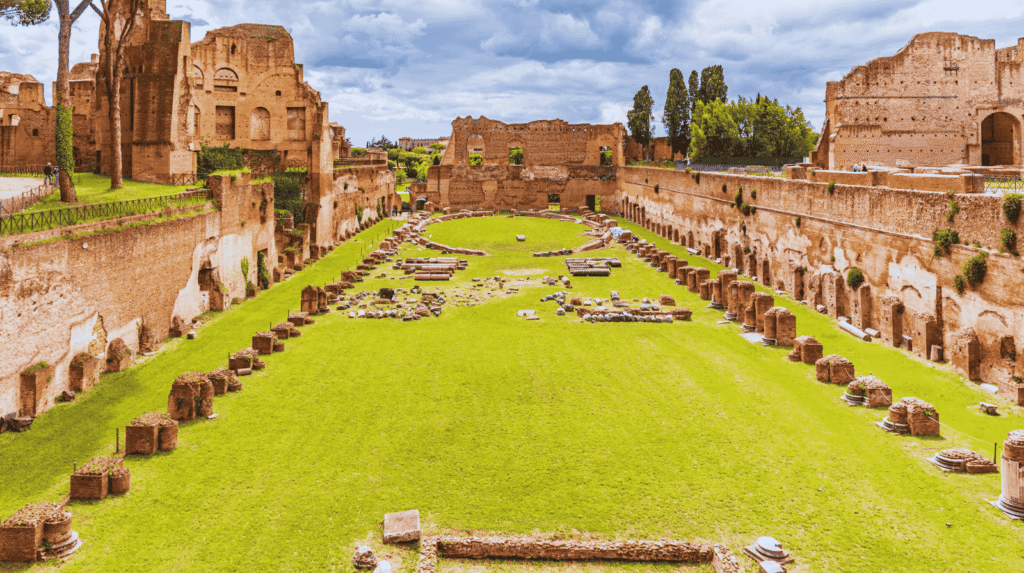
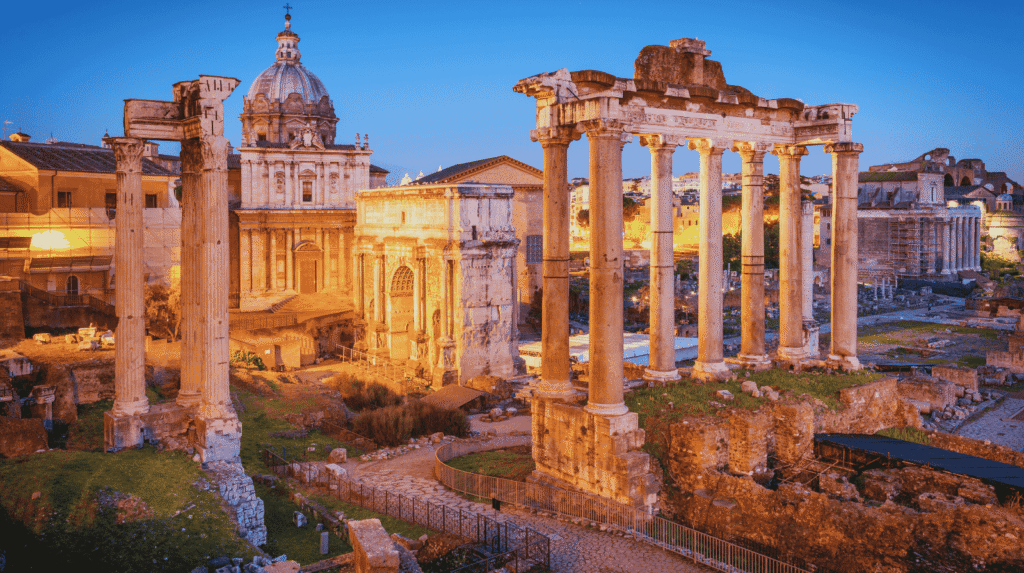
- Location 2: The Roman Forum & Palatine Hill
- What it is: Your Colosseum ticket is also valid for these two adjacent sites. The Forum was the center of public life in ancient Rome. Palatine Hill is where the emperors and elite lived.
- Why visit: The Forum immerses you in the daily life of an ancient city, while Palatine Hill offers the best views of the Forum and Circus Maximus.
- PRO TIP: Visit these sites after the Colosseum. Take a short break under a pine tree on Palatine Hill to soak in the atmosphere.
- Visit time: Approx. 2 hours.

Lunch (1:00 PM – 2:30 PM): Authentic Flavors in Monti Avoid the tourist traps around the Colosseum. Walk 10-15 minutes to the Monti district. It’s a charming, bohemian neighborhood with fantastic little trattorias. Order a classic pasta like Cacio e Pepe or Amatriciana.
Afternoon (2:30 PM – 7:00 PM): A Walk Through the Heart of Rome Now, recharged, we begin a walk that connects some of the world’s most famous landmarks.
- Location 3: The Pantheon
- What it is: A former Roman temple, now a church, and an architectural marvel. Its dome with its oculus is the largest unreinforced concrete dome in the world.
- PRO TIP: Entry is free (for now), but queues can form. Visit mid-afternoon on a weekday. The real trick is to grab an espresso at a café on the Piazza della Rotonda and admire it from the outside.
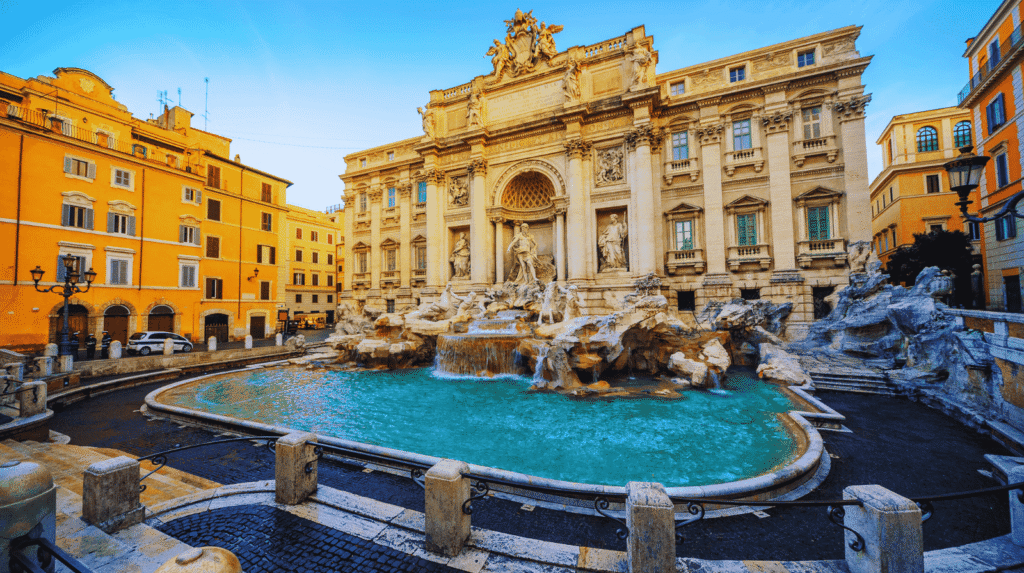
- Location 4: The Trevi Fountain
- What it is: Arguably the most famous fountain in the world, a Baroque masterpiece.
- Why visit: For its sheer splendor and the tradition of tossing a coin (with your right hand over your left shoulder) to ensure your return to Rome.
- PRO TIP: The crowds here are legendary 24/7. For a moment of peace, come before 8 AM. During the day, be patient, make your way to the railing, toss your coin, and then step back to admire it from a distance.
- Location 5: The Spanish Steps (Piazza di Spagna)
- What it is: A monumental staircase connecting the piazza with the Trinità dei Monti church.
- Why visit: It’s one of Rome’s most vibrant social hubs, perfect for people-watching.
- PRO TIP: Since 2019, it is strictly forbidden to sit on the steps. You can stand, walk, and take pictures, but sitting will earn you a fine. Climb to the top for a beautiful sunset view over the rooftops of Rome.
Evening (7:00 PM onwards): Aperitivo and Dinner Do as the Romans do. Around 7 PM, find a bar near Piazza Navona (which we saved for you to discover at night with its three stunning fountains). Order an Aperol Spritz, and you’ll get complimentary snacks. For dinner, cross the river to Trastevere.
DAY 2: Spirituality, Art & Bohemian Charm (Approx. 16,000 steps)
Morning (8:00 AM – 1:00 PM): A State within a City – The Vatican Today we visit the smallest country in the world, home to priceless treasures.
- Location 1: The Vatican Museums & Sistine Chapel
- What it is: One of the world’s largest and most important museum complexes, culminating in Michelangelo’s Sistine Chapel.
- Why visit: The collections are astounding, from Egyptian mummies to Roman sculptures. And then… the Sistine Chapel. The Creation of Adam. The Last Judgment. It’s a life-changing experience.
- THE MOST IMPORTANT QUEUE-SKIPPER TIP: Buy your ticket online from the official Vatican website a month in advance. Choose the first time slot, 8:00 AM. Arrive 15-20 minutes early. Once inside, don’t follow the herd. Follow the signs for the “short cut” directly to the Cappella Sistina. Go there first, while it’s still relatively empty. Experience it in peace. Afterwards, explore the rest of the museums at your leisure, working your way back. You will thank yourself for this.
- Visit time: Minimum 3-4 hours.
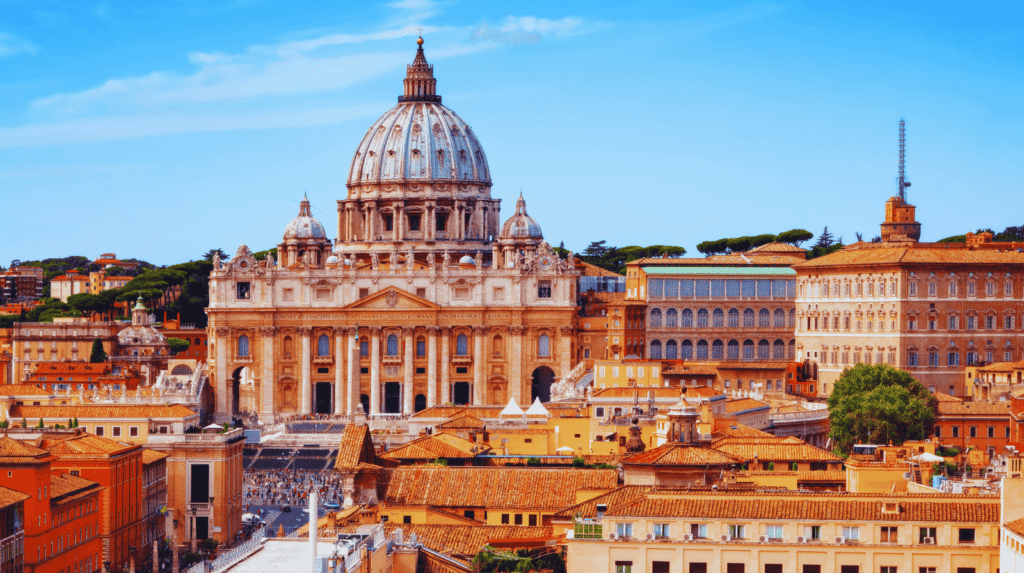
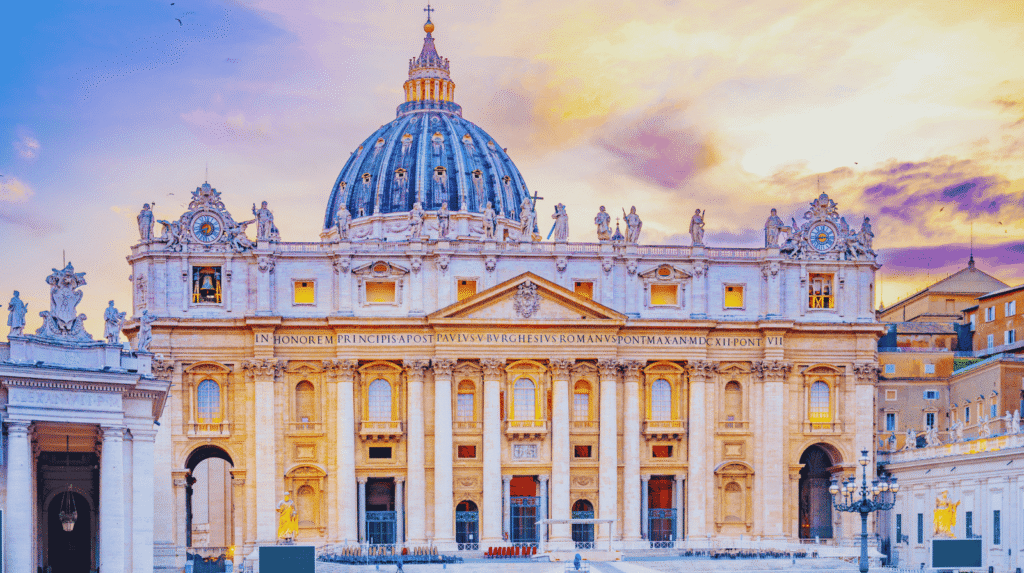
- Location 2: St. Peter’s Basilica
- What it is: The largest church in the world and the spiritual center of Catholicism.
- PRO TIP: Entry is free, but the security line can be massive. There’s a “trick”: a passageway on the right at the exit of the Sistine Chapel (officially for tour groups only) leads directly into the Basilica, skipping the main queue. It’s worth trying to slip through.
- Remember the dress code: Shoulders and knees must be covered to enter the Vatican.
Lunch (1:30 PM – 3:00 PM): Prati & Borgo Pio The neighborhoods around the Vatican are full of tourist traps. Walk a few streets away from the main road leading to St. Peter’s Square to find an authentic trattoria or osteria.
Afternoon (3:00 PM – 7:00 PM): The Charm of Trastevere & a View to Remember Cross the Tiber River and enter a completely different world.
- Location 3: Trastevere
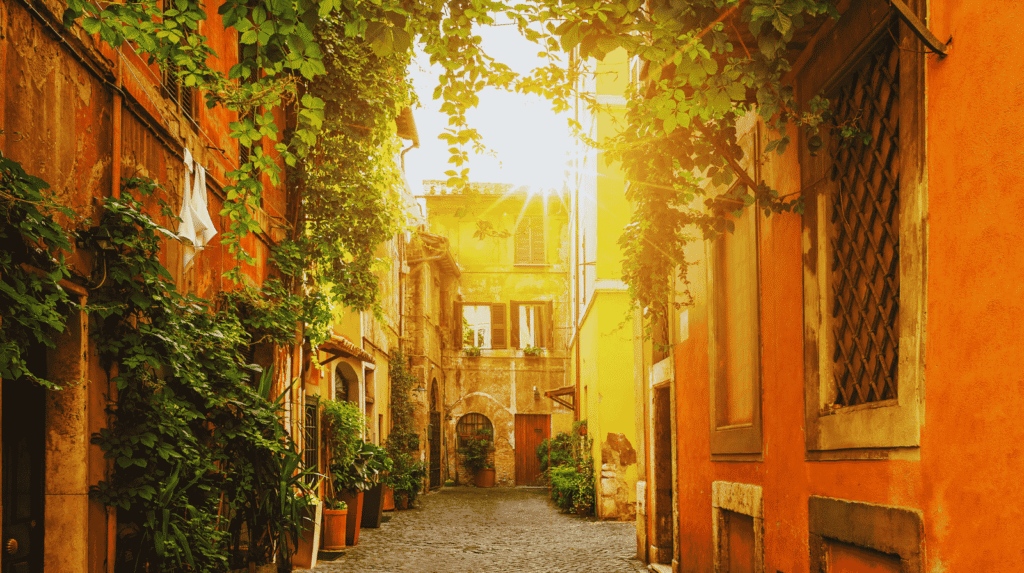
- What it is: Literally “across the Tiber.” This is Rome’s most charming and photogenic neighborhood, with its narrow cobbled streets, ivy-covered buildings, and hidden squares.
- PRO TIP: Have no plan. Just wander. Get intentionally lost. Every corner reveals something beautiful. Be sure to visit the Basilica of Santa Maria in Trastevere, one of the oldest churches in Rome.
- Location 4: Janiculum Hill (Gianicolo)
- What it is: The hill above Trastevere that offers the absolute best panoramic view of the entire city of Rome.
- Why visit: For a breathtaking photo and a moment of peace above the hustle and bustle.
- PRO TIP: Climb Janiculum Hill just before sunset. The light bathing the city is magical.
Evening (7:00 PM onwards): Farewell Dinner in Trastevere Your last night in Rome must be special. Trastevere is the epicenter of Roman gastronomy. Find a restaurant in a side alley, not on the main square. Try something new, like Saltimbocca alla Romana (veal with prosciutto and sage). Afterwards, grab a gelato and soak in the atmosphere. You’ve earned it.
Gastronomy 101: What to Eat and How to Spot the Real Deal
- Pasta: The “big four” Roman pastas are Carbonara, Cacio e Pepe, Amatriciana, and Gricia.
- Pizza: Roman pizza (tonda) is thin and crispy. Also try pizza al taglio (pizza by the slice).
- Coffee: Drink espresso standing at the bar (al banco) like a local-it’s cheaper. Cappuccino is a morning-only drink (before 11 AM).
- Gelato: Real, artisanal gelato (artigianale) is never brightly colored. Pistachio should be a muted brownish-green, not neon green.

Conclusion: Your Rome, Your Rules
Rome in 48 hours without the queues is not a fantasy. It’s the result of smart planning that gives you the most valuable currency on any trip: time.
When you don’t waste hours in line, you gain freedom. The freedom to have one more espresso. The freedom to get lost in the alleys of Trastevere. The freedom to sit on a bench on Palatine Hill and imagine how the emperors looked out over their city.
This city will seduce you, inspire you, and exhaust you in the best possible way. You’ll return home with sore feet, a full camera roll, and a heart full of memories. And you will have tossed that coin into the Trevi Fountain, not just for tradition’s sake, but because you’ll know, deep down, that you must return.