

I remember standing on the Kalemegdan Fortress in Belgrade, watching the sun melt into the horizon, right at the exact spot where the Sava River kisses the mighty Danube. In that moment, I could feel the echoes of history-of Roman legions, Ottoman pashas, and Serbian kings all claiming this same piece of earth.
That is Serbia. A nation at the crossroads of civilizations.
This isn’t just a guide. This is my story of a journey that will take you from the 24/7, electric pulse of Belgrade; to the elegant, Austro-Hungarian charm of Novi Sad; and south to Niš, the birthplace of a Roman Emperor. This is a land of fortress walls, sacred monastery frescoes, and cobblestone streets that whisper tales.
This is your invitation to a country that will inspire you with its raw beauty, its profound history, and its legendary hospitality. This is a story you will want to share.
Why Serbia? It’s Not a City, It’s a Story
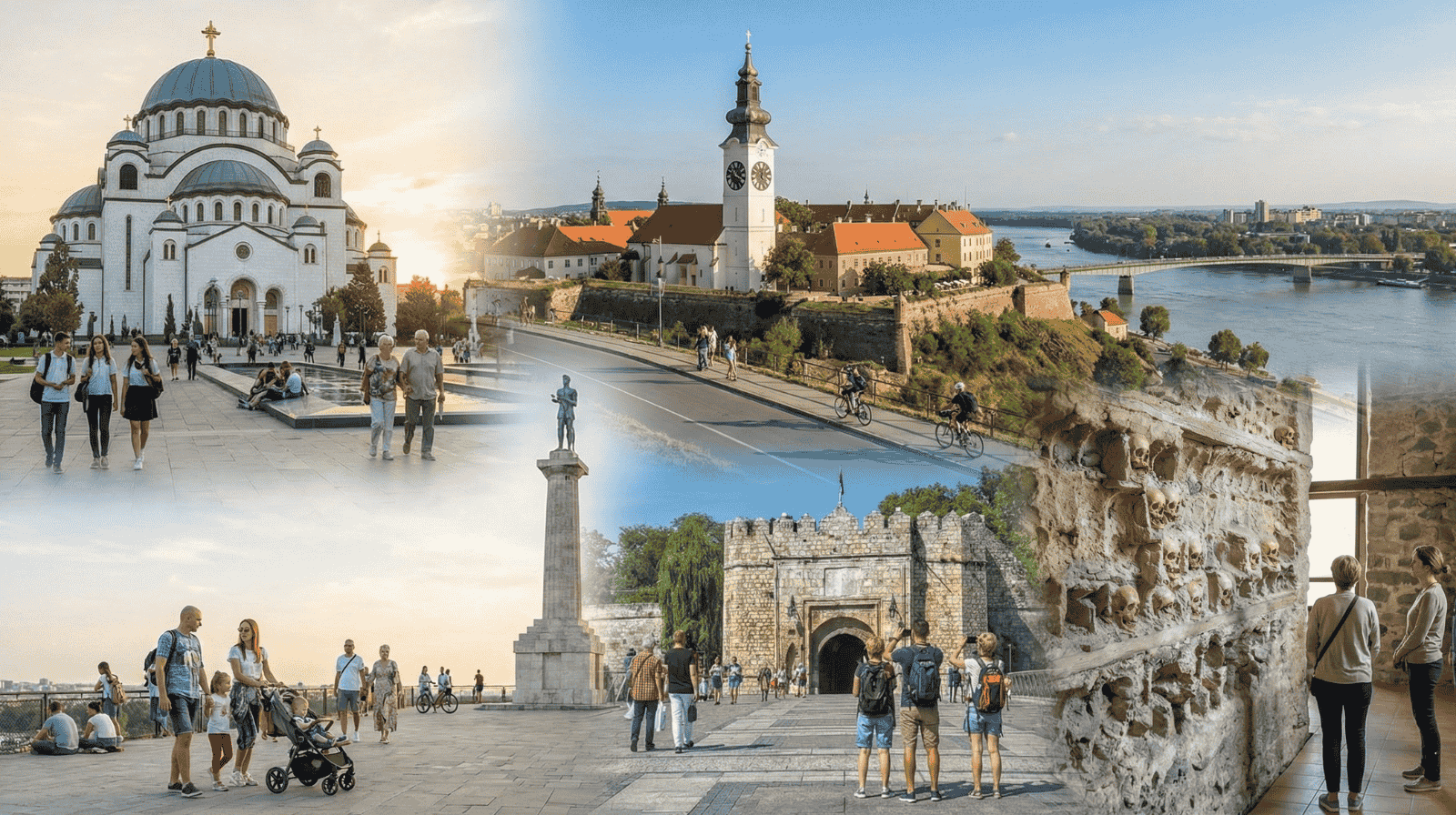
I stood on Kalemegdan, watching the rivers merge. Later, I was on the Petrovaradin Fortress in Novi Sad, savoring a rich Vojvodina goulash. And then, I was in Niš, standing in silence before the Skull Tower (Ćele Kula), feeling the true weight of history.
Serbia is a crossroads, where every stop offers a story, a taste, and a sight worth sharing. This is the perfect, “off-the-beaten-path” European adventure for history buffs, foodies, and culture lovers.
Part 1: Belgrade (The “White City” & Heart of the Balkans)
Belgrade is a kaleidoscope of history and modern, raw energy. It never sleeps.
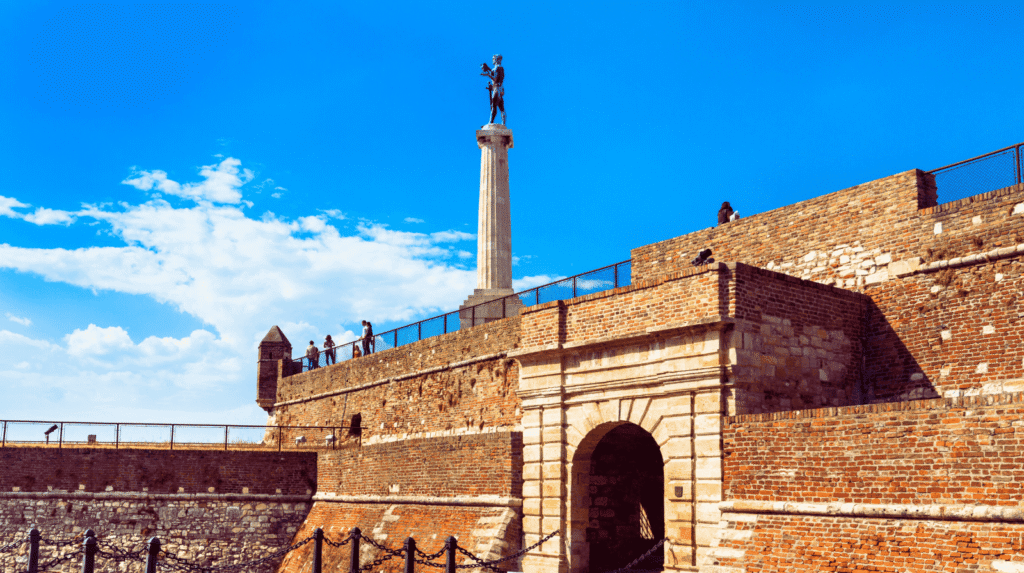
1. Kalemegdan & The Belgrade Fortress
- The Vibe (The Euphoria): This isn’t just a fortress; it’s the living room of Belgrade. It’s a vast, beautiful park, built on Roman, Ottoman, and Serbian ruins, where you’ll see families, couples, and old men playing chess.
- The “Must-Do”: Walk to the “Pobednik” (The Victor) statue at sunset. The view of the confluence of the Sava and Danube rivers is the single most iconic and soulful view in the city.
- Practical: The Military Museum (500 RSD / €4.50) is fascinating, but the real magic is just walking the ramparts for free.
- Who Is This For? Everyone. History lovers, romantics, photographers.

2. Skadarlija (The “Bohemian” Soul)
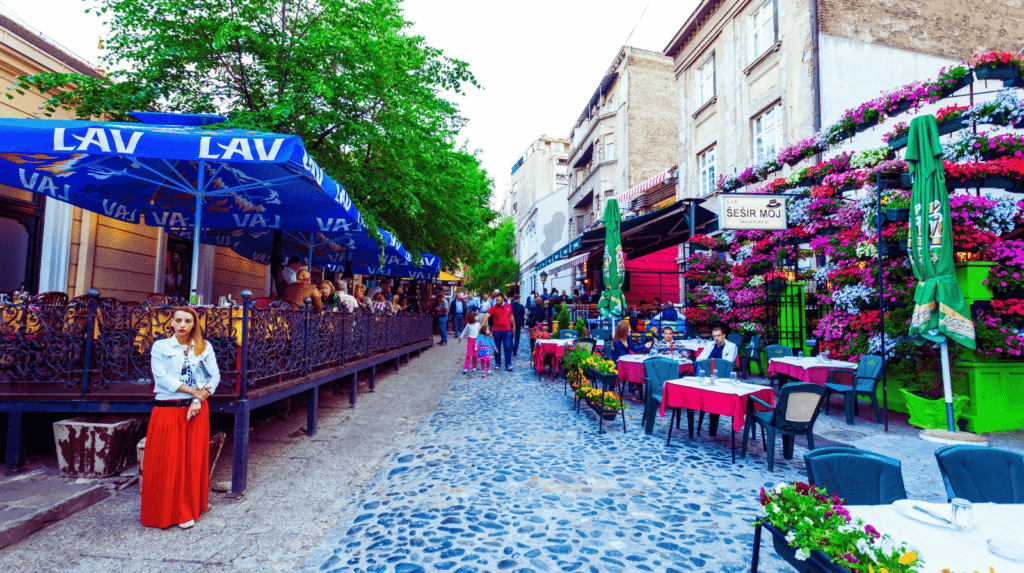
- The Vibe (The Euphoria): The “Montmartre” of Belgrade. A short, charming, cobblestone street that was the heart of the city’s bohemian life in the 19th century.
- The Feeling: This is where you go for a Kafana experience. It’s lined with traditional restaurants (kafane) with checkered tablecloths and live, traditional Starogradska (old-town) music.
- My #1 Tip: Go for dinner. Order a Karađorđeva šnicla (a massive, breaded, and stuffed veal cutlet, approx. 1500 RSD / €13) and a bottle of rakija (brandy). It’s a joyous, loud, and delicious experience. A full dinner for two, with music, can be 7000 RSD+ (€60+), but it’s worth it.
3. St. Sava Temple
- The Vibe (The Euphoria): One of the largest Orthodox churches in the world. Its white-marble dome dominates the Belgrade skyline.
- The “Wow” Moment: The main church is stunning, but you must go down into the Crypt. It is a jaw-dropping, glittering, subterranean hall, completely covered in gold mosaics and frescoes. It will leave you breathless.
- Practical: Entry is free. A guided tour (approx. 700 RSD / €6) can offer deeper spiritual context.

Where to Stay & Eat
- Stay: Hostels start from 2500-5000 RSD (€20-€40). 4-star hotels range from 5000-20,000 RSD (€40-€170). For 5-star luxury, the St. Regis or Square Nine are top-tier (over 40,000 RSD / €340).
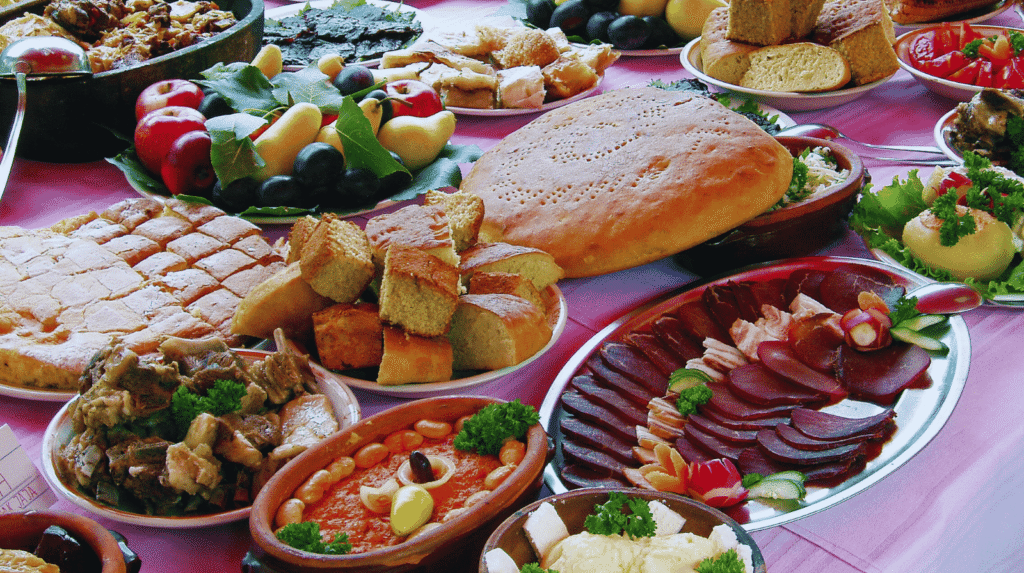
- Eat: Roštilj (BBQ) is king. A pljeskavica (Serbian burger) or ćevapi in a kafana will cost 800-2000 RSD (€7-€17).
Part 2: Novi Sad (The “Serbian Athens” & Cultural Capital)
A 1-hour train ride from Belgrade, Novi Sad is a different world. It’s clean, calm, and has a beautiful, elegant, Central-European vibe.
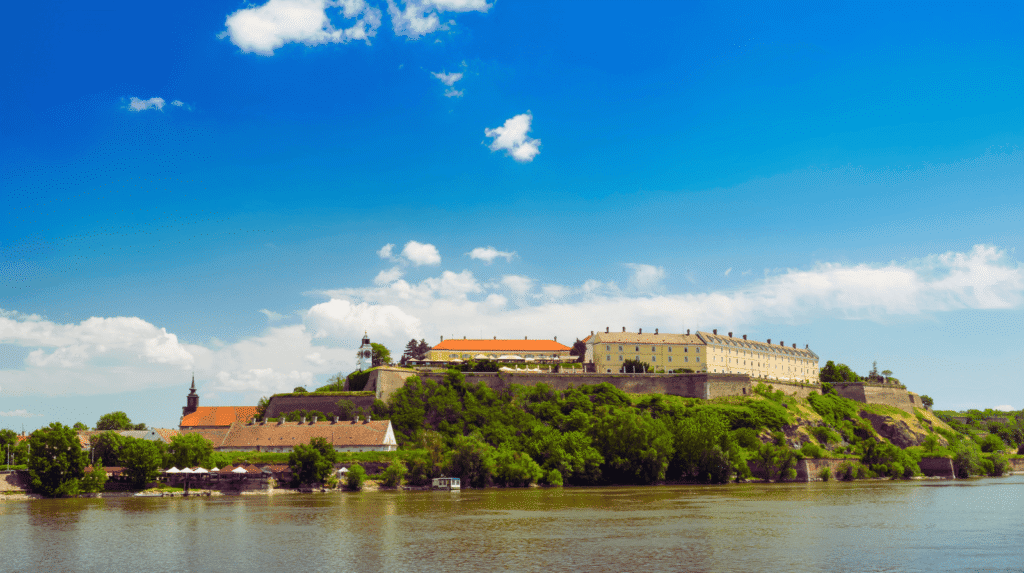
1. Petrovaradin Fortress (The “Gibraltar on the Danube”)
- The Vibe (The Euphoria): A massive 18th-century, Austro-Hungarian fortress across the river.
- The Feeling: Walking its ramparts and exploring its (allegedly) 16km of underground tunnels is a true adventure. The view of Novi Sad and the Danube is spectacular.
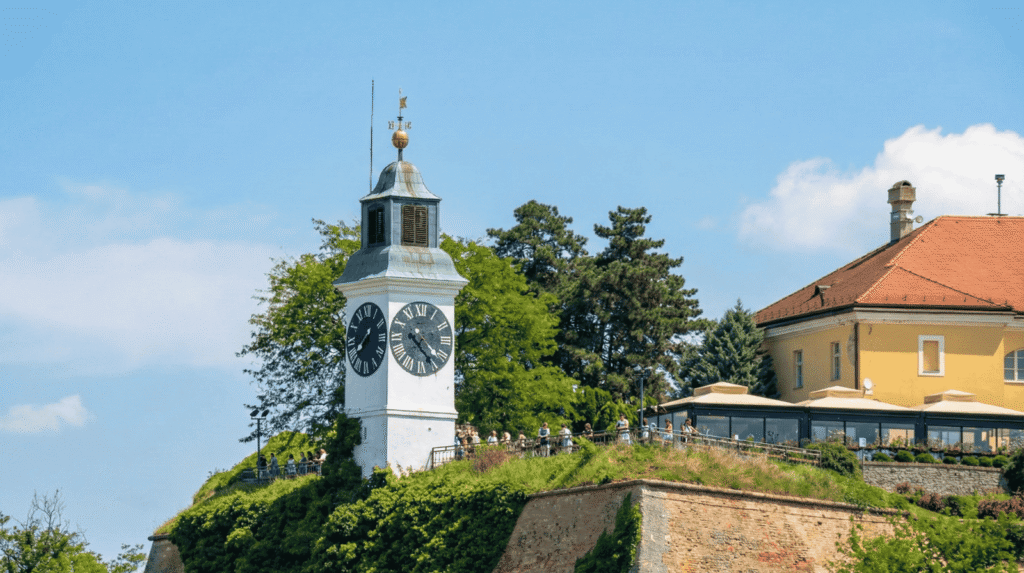
- The Icon: The “Drunk Clock”-a clock tower where the big hand shows the hours (for sailors on the river to see) and the small hand shows the minutes.
- The “Must-Do”: If you are here in July, this fortress transforms into the EXIT Festival, one of the most famous and euphoric music festivals in all of Europe. (Tickets from 7000 RSD / €60).
2. The Old Town & Štrand
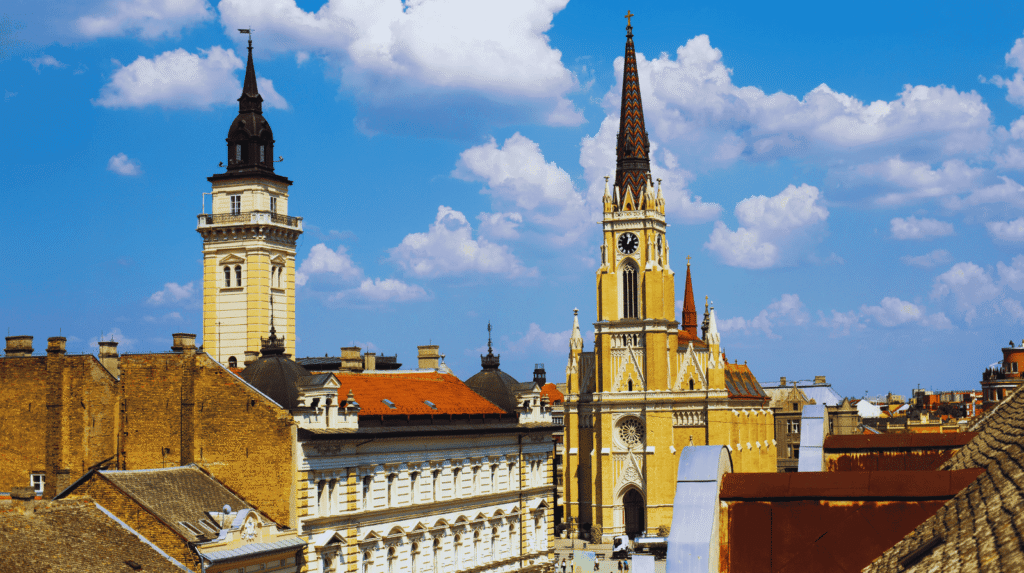
- The Vibe (The Euphoria): The city center is a beautiful, pedestrian-only zone of colorful Habsburg-era buildings, centered around the stunning Catholic Name of Mary Church.
- The “Beach”: Štrand is the city’s beloved river-beach on the Danube. It’s a perfect, lazy summer-day escape with locals, food stalls, and a great vibe.
- My #1 Tip: A 15-minute drive takes you to Sremski Karlovci, a tiny, stunning, baroque “wine town” that feels frozen in time. You must try the local Bermet wine.
| Practical Tips (Novi Sad) | |
| Transport | “Soko” high-speed train from Belgrade (1 hr, from 500 RSD / €4.50). |
| Stay | Hostels (2500-5000 RSD / €20-€40), Hotels (4000-15,000 RSD / €35-€120). |
| Food | Try Vojvođanski goulash (600-1500 RSD / €5-€13). |
Part 3: Niš (The “Emperor’s City” of Rome & Ottomans)
In the south of Serbia, Niš is a city of raw, authentic charm and deep history.
1. The Skull Tower (Ćele Kula)
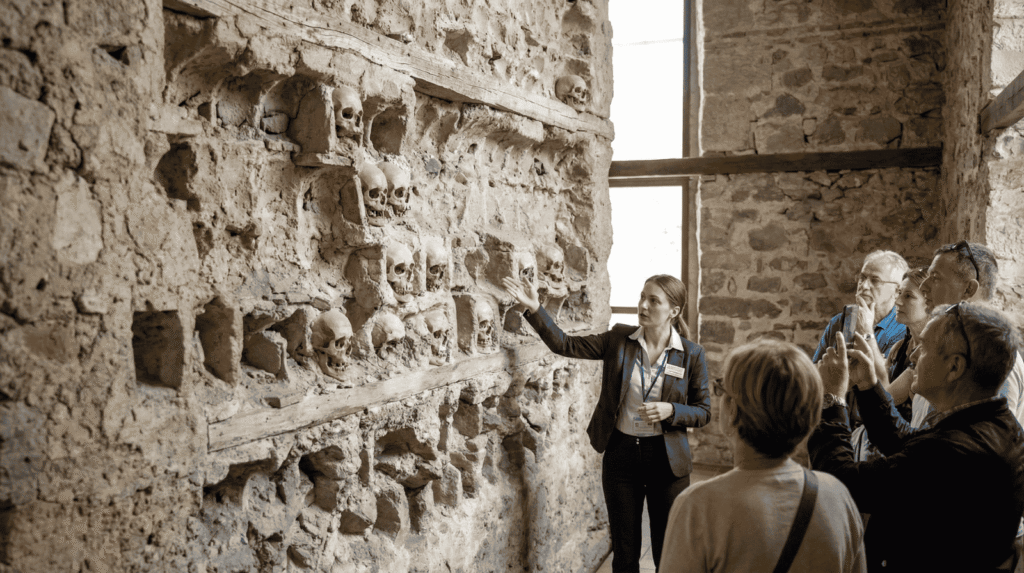
- The Vibe (The Euphoria): This is a must-see. A unique, powerful, and harrowing monument. It is a stone tower, built by the Ottomans in 1809, with the skulls of Serbian rebels embedded in its walls as a warning.
- The Feeling: Standing in this small, quiet chapel is one of the most profound and moving historical experiences you can have. It is an unforgettable testament to the price of freedom.
- Practical: Entry is 300 RSD (€2.50).
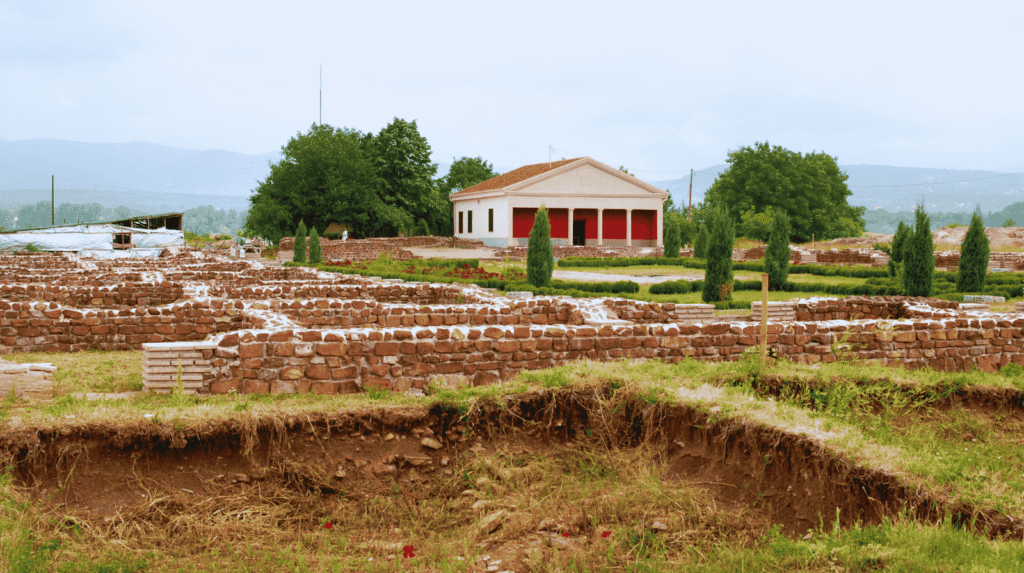
2. Mediana (The Roman Palace)
- The Vibe (The Euphoria): Niš is the birthplace of Emperor Constantine the Great. Mediana was his luxurious summer palace and villa.
- The Feeling: You are walking through the 4th-century ruins of a grand Roman estate, with beautiful, original floor mosaics still intact.
- Practical: Entry is 200 RSD (€1.70).
3. Niš Fortress
- The Vibe (The Euphoria): A massive, perfectly preserved, 18th-century Turkish fortress in the center of the city.
- The Feeling: Unlike Kalemegdan, this is a hub of life. It’s full of cafes, bars, and in summer, it’s the home of the world-famous Nišville Jazz Festival.
- My #1 Tip: Niš is the true BBQ capital of Serbia. The pljeskavica here is a work of art.

| Practical Tips (Niš) | |
| Transport | Train from Belgrade (3+ hrs, from 1000 RSD / €8.50). |
| Stay | Hostels (2000-4000 RSD / €17-€35), Hotels (4000-10,000 RSD / €35-€85). |
| Food | A full BBQ meal will cost 500-1200 RSD (€4.50-€10). Burek is a must-try. |
Your 7-Day “Serbian Crossroads” Itinerary
- Days 1-3: Belgrade (The Pulse).
- Day 1: Arrive (BEG). Check in. Kalemegdan sunset. Dinner in Skadarlija.
- Day 2: St. Sava Temple. Explore the “hipster” Dorćol district. Night out on the Splavovi (river clubs).
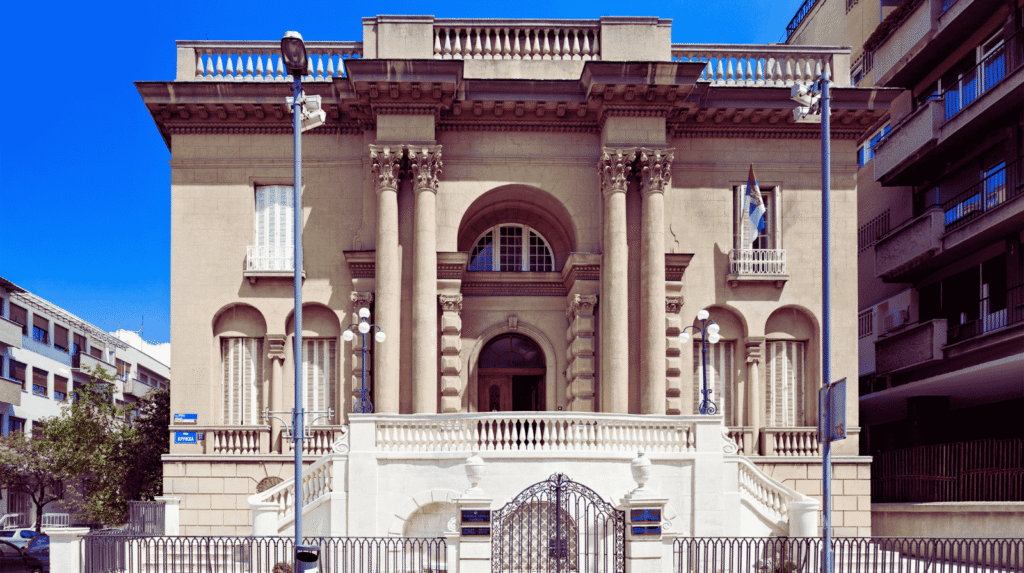
- Day 3: Nikola Tesla Museum or Museum of Yugoslavia.
- Day 4: Novi Sad (The Vibe).
- Morning: High-speed train to Novi Sad.
- Afternoon: Explore the Old Town & Petrovaradin Fortress.
- Evening: Dinner and tamburaši (musicians) at a local čarda (river restaurant).
- Day 5: Niš (The History).
- Morning: Train/Bus to Niš.
- Afternoon: Visit Mediana and the Skull Tower (Ćele Kula).
- Day 6: Niš & Depart.
- Morning: Explore Niš Fortress. Have the best burek of your life for breakfast.
- Afternoon: Fly out of Niš (INI) or return to Belgrade.
A Final Word: The Soul You Didn’t Expect
You will leave Serbia with your camera full of fortress walls, golden mosaics, and river sunsets. You will leave with the taste of rakija and roštilj on your tongue.
But you will take home the feeling of genuine, old-world hospitality.
Serbia is a land of profound history, raw energy, and a warmth that is becoming rare in the world. It’s a story of resilience that demands to be shared. Pack your bag. Call your friends. A real, euphoric adventure is waiting for you, right in the heart of the Balkans.