Forget the thumping bass of Berlin or the fairytale castles of Bavaria. I’m asking you to come somewhere different.
Come to a city that is not just a place, but an idea.
I’m talking about Weimar.
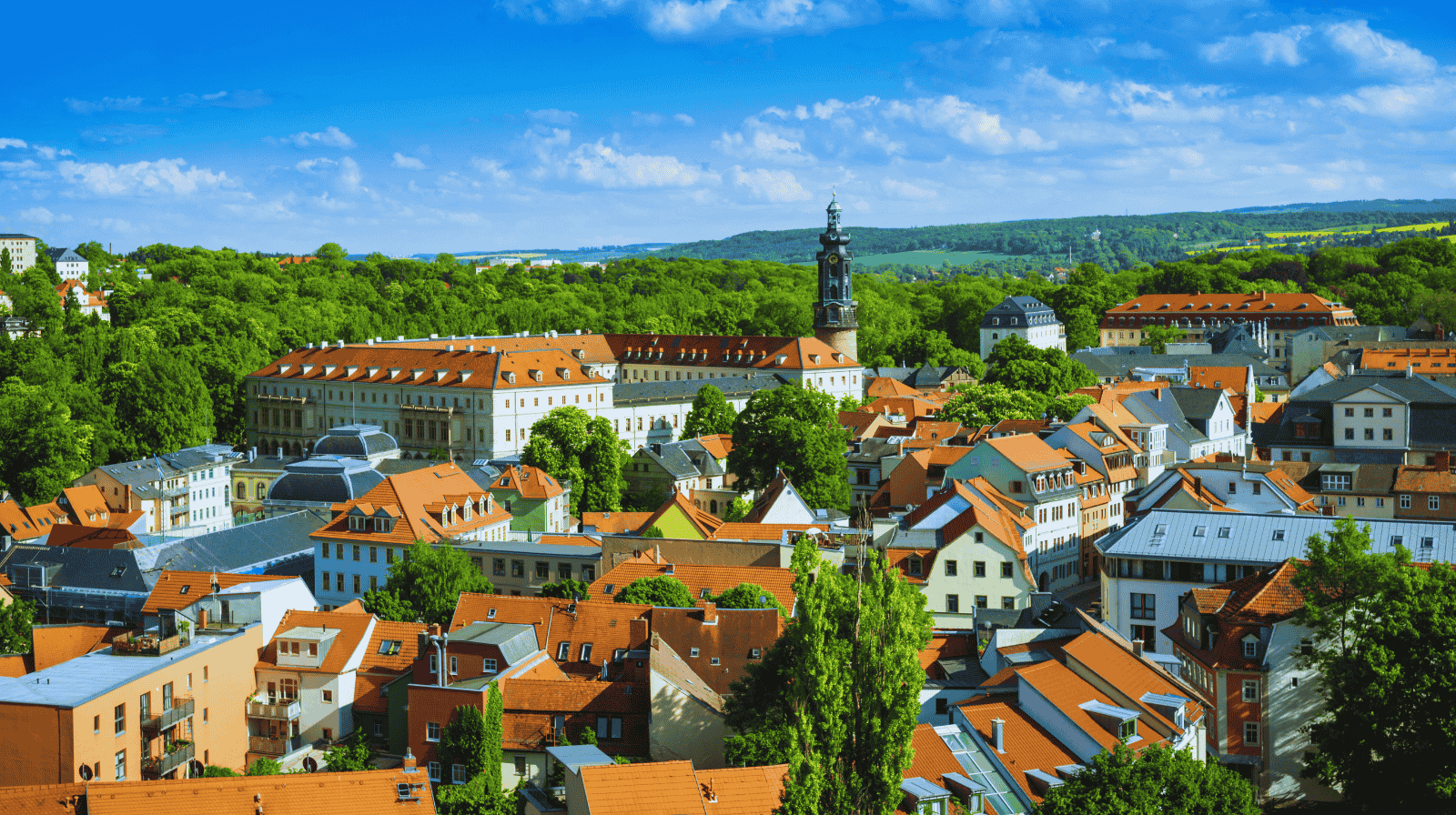
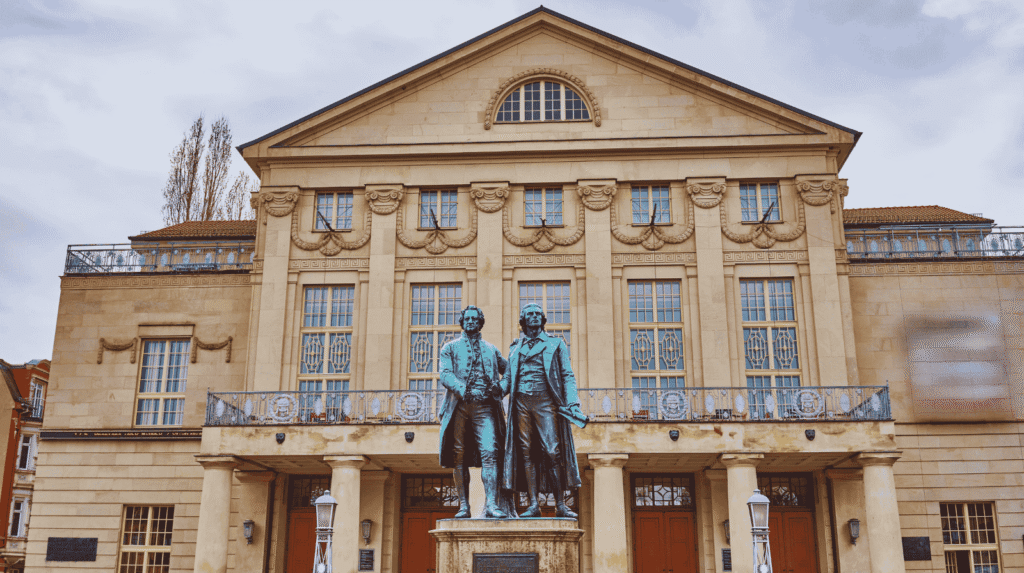
You arrive, and the air itself feels… intelligent. It’s a small, beautiful city, but the weight of the minds that walked these exact cobblestones is staggering. This is the “Athens on the Ilm,” the city where, for a brief, explosive moment, Germany’s (and perhaps the world’s) greatest thinkers gathered.
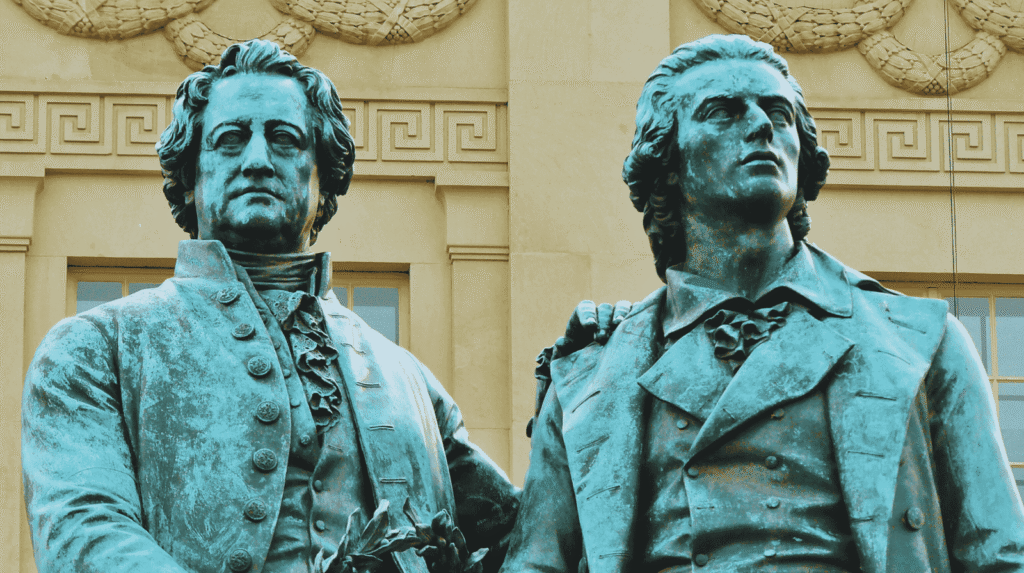
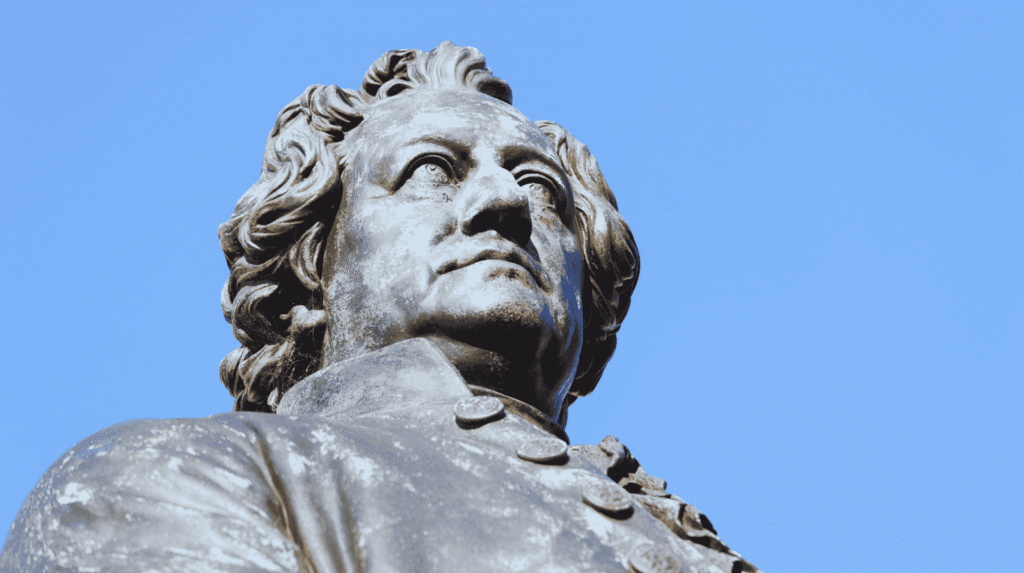
Goethe. Schiller. Nietzsche. Liszt. Bach.
This is where German Classicism was born. It’s where Faust was finished.
Then, just as the dust settled, it became the birthplace of another revolution: Bauhaus, the movement that literally invented the modern look of your phone, your furniture, and your life.
But Weimar holds a third, darker truth. A few kilometers away lies the shadow: Buchenwald, one of the largest concentration camps in Germany.
And that is the unbelievable, terrifying, and profoundly moving reason you must go. Weimar is not a simple, happy vacation. It’s a conversation. It’s a city that holds the absolute pinnacle of human genius and the absolute abyss of human cruelty, all within a 15-minute bus ride.
I came here expecting a sleepy, historic town. I booked it as a “smart” side-trip on lastmingo.ch/ by finding a cheap flight to Leipzig/Halle (LEJ) and taking the easy train ride over. I left a different person.
This is your invitation to the most intellectually euphoric and emotionally important travel experience in Europe.
Part 1: The Euphoria of Genius (The Classical Weimar)
This is the city of titans. You are literally walking through the pages of world literature.
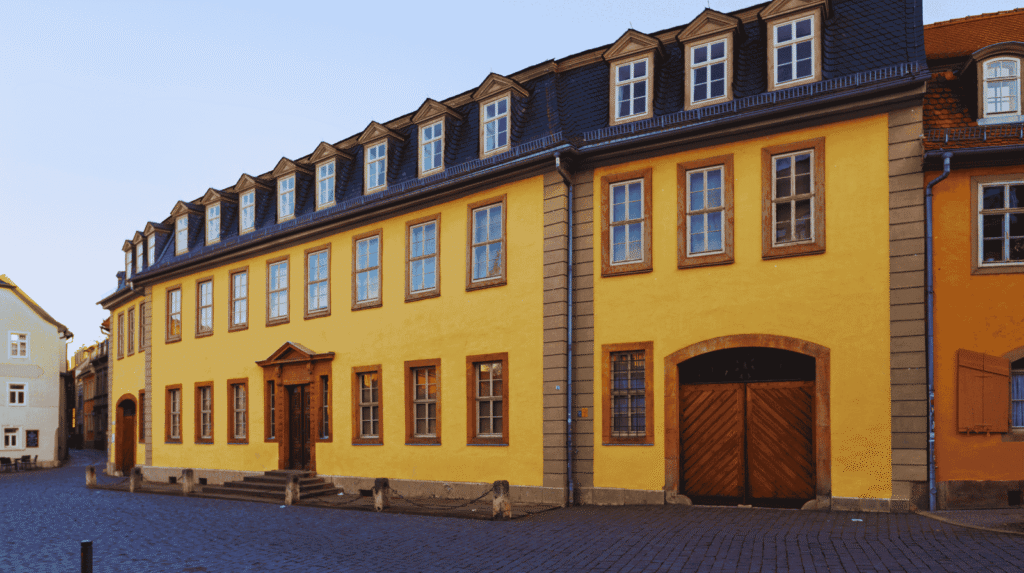
Goethe National Museum & Residence
The Vibe (The Euphoria): This is the one. You walk through Goethe’s elegant home, and it’s beautiful. But then… you step into his study. It’s a simple room, left exactly as it was on the day he died. This is the desk. This is the chair. This is the room where Faust was completed. I stood there for 10 minutes, completely silent. It is a “power spot” of human creation. The energy is so thick you can feel it. It’s an intellectual pilgrimage.
Who Is This For? The writer, the dreamer, the historian, the reader.
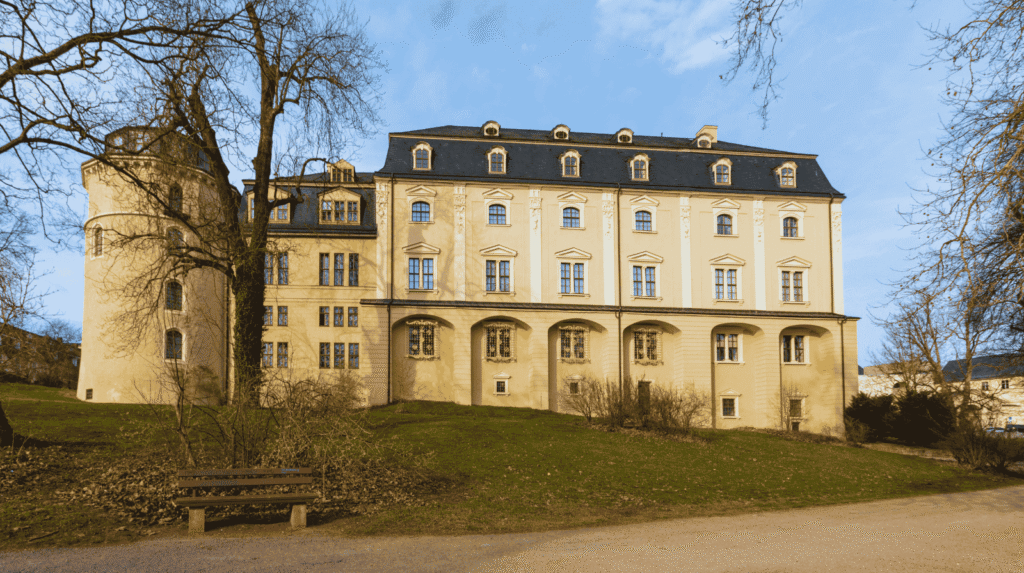
Duchess Anna Amalia Library (Herzogin Anna Amalia Bibliothek)
The Vibe (The Euphoria): If you are a person who loves books, this place will make you weep. The famous Rococo Hall is, without question, the most beautiful room in Germany. It’s a three-story, light-filled oval of white and gold, containing a priceless collection of literature. It is, quite simply, a cathedral of books. It is heaven on earth for any bibliophile.
My Personal Tip: You MUST book your ticket weeks or even months in advance. They only let a tiny number of people in each day to protect the books. Do not leave this to chance.
Schiller’s Residence
The Vibe (The Euphoria): Just down the street from Goethe’s palace is the more humble, attic home of his best friend and rival, Friedrich Schiller. This is where he wrote William Tell. It feels more “human” than Goethe’s home. You can feel the fire of his revolutionary spirit. Standing in his study, you feel a jolt of pure inspiration.
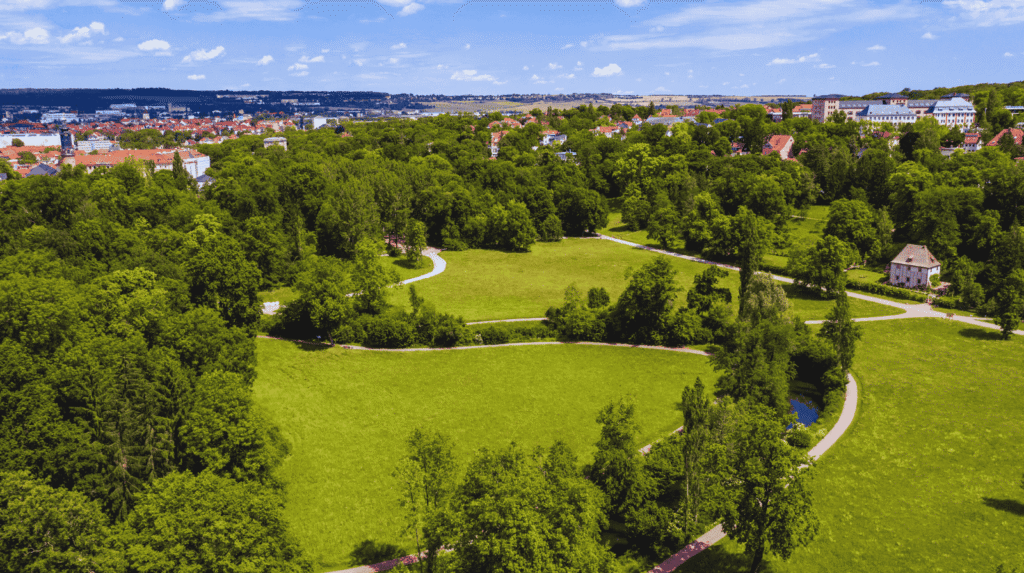
The Park on the Ilm
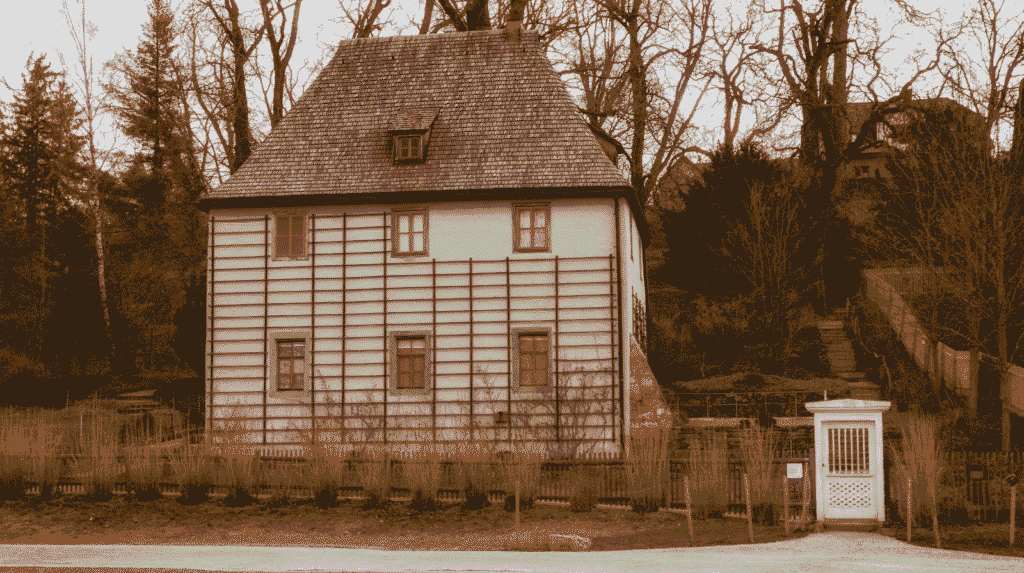
The Vibe (The Euphoria): This is where they thought. This stunning, sprawling English park is where Goethe himself served as commissioner. You must walk to Goethe’s Garden House (Goethes Gartenhaus), his first residence in Weimar. It’s a tiny, perfect cottage, a sanctuary where he wrote his poems. This is the perfect place to disconnect and have an original thought.
Part 2: The Birth of “Cool” (The Bauhaus Revolution)
Just when you think Weimar is all about 18th-century poetry, you turn a corner and are hit by the 20th century.
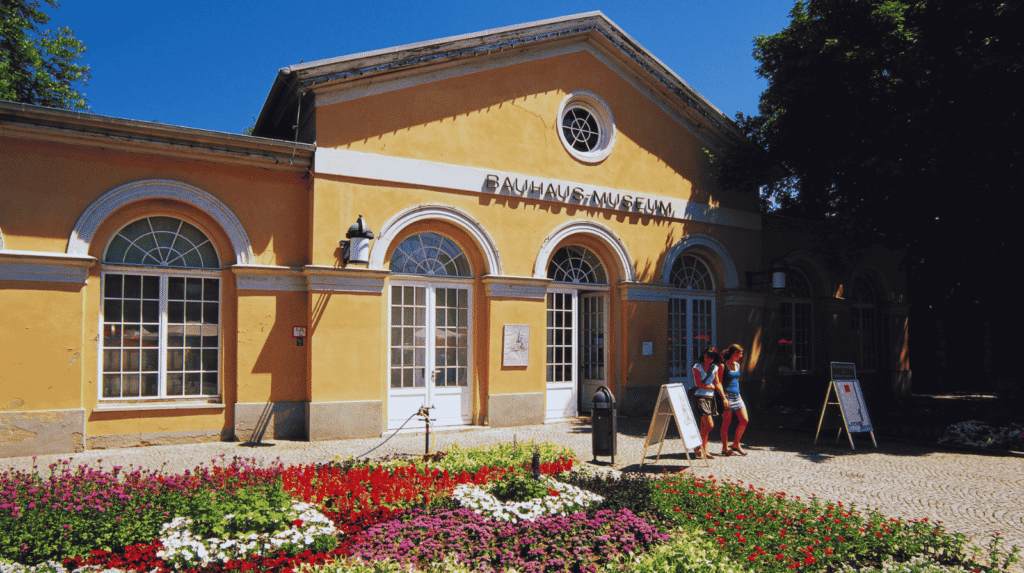
The Bauhaus Museum
The Vibe (The Euphoria): This is where it all began. In 1919, Walter Gropius started a school here that changed the world. You’ll see the original, iconic Bauhaus chairs, the minimalist teapots, the radical graphic design. You realize: this is where “modern” was invented. The phone in your hand, the font on this screen, the IKEA in your home-it all traces back to this small town. It’s a jolt of pure, rebellious, creative energy.
Who Is This For? The designer, the artist, the architect, the person who loves clean lines.
Haus am Horn
The Vibe (The Euphoria): This is the only house actually built by the Bauhaus in Weimar. It’s a simple, white, cubic house from 1923 that looks like it could have been built yesterday. It was a complete revolution. Walking through it, you feel the excitement of a new, idealistic future being born.
My Personal Tip: Take a walk through the Main Building of the Bauhaus-Universität Weimar. This is the original school. You can walk the halls and see the very studios where these masters taught.
Part 3: The Shadow & The Soul (The Buchenwald Memorial)
This is the part of the journey that is not “fun.” It is essential.
About 20 minutes outside the city-on the other side of the same Ettersberg hill where Goethe loved to walk-is the Buchenwald Memorial.
The Vibe (The Horror & The Duty): There is no euphoria here. There is a profound, cold, gut-punch of reality. You walk through the infamous gate (“Jedem das Seine” – To Each His Own). You see the crematorium. You stand in the vast, silent, gravel-filled roll-call square. The wind is the only sound.
The Feeling: This is the paradox of Weimar. This is the reason you must come. In one small town, you have the proof of humanity’s highest artistic genius and its lowest moral depravity. One cannot be understood without the other. It is not an “attraction”; it is a responsibility. It is the most powerful lesson in humanity you will ever receive.
My Personal Tip: Go in the morning. Give it the time and respect it deserves. Then, come back to Weimar in the afternoon. Sit in the Park on the Ilm. The contrast will shake you to your core. It will make you value the light of Goethe’s poetry in a way you never could before.
Where to Stay, Eat, and Feel the Vibe
To Stay (The Icon):Hotel Elephant. This is the place. It’s legendary. Thomas Mann wrote about it in Lotte in Weimar. It’s been the historic guesthouse for centuries. It’s expensive, but an icon.
To Stay (The Boutique):Die Feine Kleine (The Fine Little). A gorgeous, small, art-filled hotel that perfectly blends the classic and the modern.
To Eat (The History):Weißer Schwan (White Swan). This restaurant has been here since 1550. Goethe ate here. You can literally sit in the “Goethe-Zimmer,” his favorite private dining room. The food is traditional, hearty Thuringian cuisine.
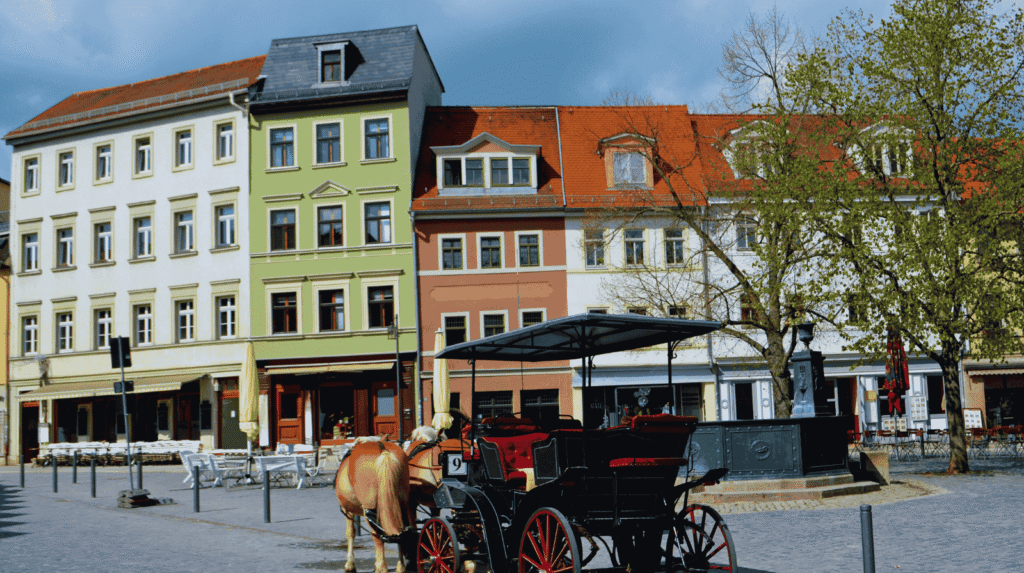
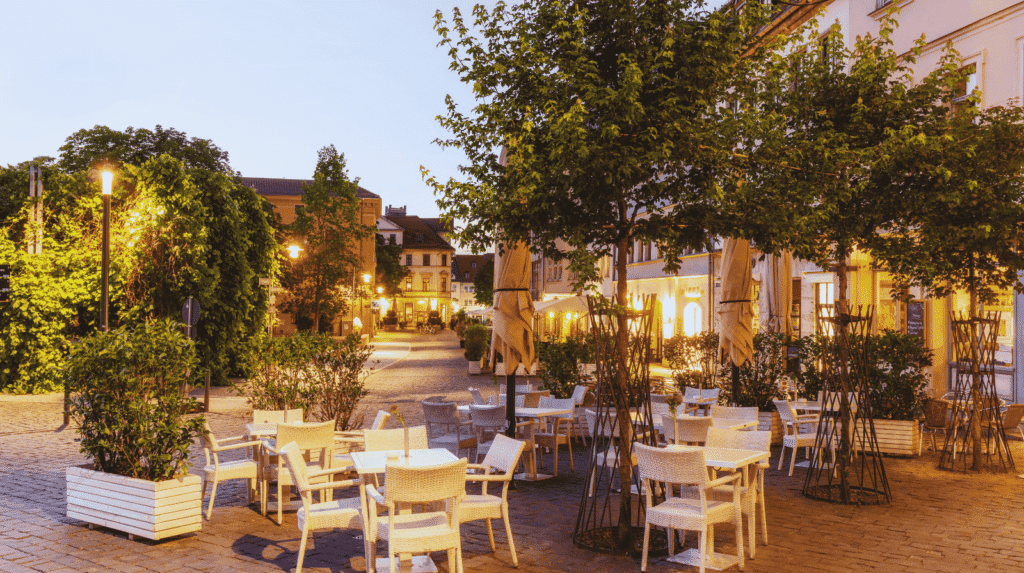
To Eat (The Vibe): Grab a Thüringer Bratwurst (the most famous sausage in Germany) from a stall in the Marktplatz (Market Square). It’s the perfect, cheap, delicious lunch.
Your Final Call
Weimar is not a party. It is a pilgrimage.
You will not leave this city with just a tan or a souvenir. You will leave with a fuller mind and a heavier heart. You will be inspired to create, and you will be forced to think.
You don’t just “do” Weimar. You read it. You absorb it.
Find that flight on lastmingo.ch/. Book that train. Go walk in the footsteps of giants. Your brain, and your soul, will thank you for it.