

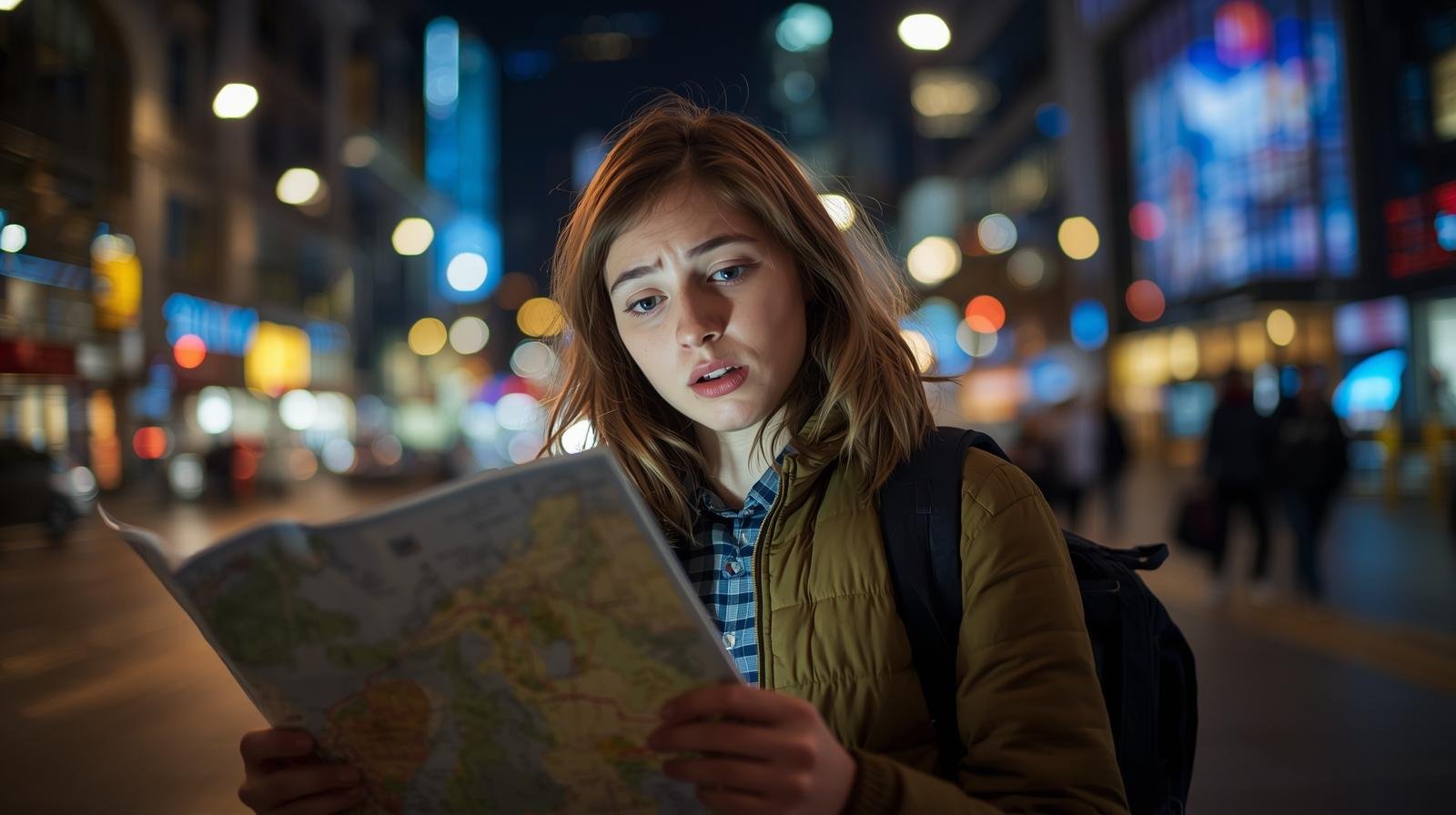
You’re finally off on your big trip – maybe it’s your first time exploring a massive, exciting new city all on your own! You feel invincible, ready to tackle anything… until you step out of the metro, the map is confusing, and that little voice whispers, “Wait, I think I’m lost!”
That moment of panic is totally normal! But I’m here to tell you that getting temporarily lost is not a disaster; it’s an inevitable, often exciting, part of the adventure. The difference between a tourist meltdown and a traveller taking charge is knowing the first few simple, calm steps to take.
I’ve been tangled in the confusing streets of Venice, missed my bus stop in Bangkok, and had my phone die in the middle of Berlin. And every time, I relied on these crucial first steps to quickly and safely get back on track.
This is your ultimate, experience-driven guide for younger, independent travellers. We’ll show you how to swap the panic button for a plan and turn those moments of confusion into a confidence-boosting victory!

The Golden Rule: Stop, Breathe, and Think
The immediate, natural response to getting lost is to panic or start walking faster. DO NOT DO THIS! The first, most important step is to stop moving and find a safe, stable place to assess the situation.
Technique Spotlight: The “Safety Anchor”
- What it is: Immediately locate the closest, most reliable-looking public or commercial building.
- The Anchor List: A coffee shop, a major hotel lobby, a post office, a police station, or a metro/train station entrance.
- The Benefit: Getting inside gives you a safe, warm, and often Wi-Fi-enabled spot to take a deep breath and start your plan without the pressure of the street. If you feel uneasy, a hotel reception desk is always a great place to ask for help.
- Recommended for: Everyone, but especially solo travellers who need a secure place to think clearly.

1. Digital Recovery: Activating Your Lifelines
Your phone can save you – if you use it correctly and quickly!
- The Offline Maps Lifeline: CRITICAL: Did you follow our guide and download the offline map for the city on Google Maps? If so, turn off your data/Wi-Fi, open the app, and you can see your blue dot location in real-time, even without signal! Use this to plot a route back to your accommodation.
- The Battery Budget: If your phone battery is low, immediately stop using it for social media or photography. Turn off Wi-Fi and Bluetooth to conserve power. Your remaining battery is a life-saving tool – budget it only for navigation or emergency calls.
- The “Screenshot” Advantage: You should always have a screenshot of your hotel’s address, the local emergency number (e.g., 112), and the name of a contact person saved in your photo album. Benefit: These are accessible instantly, even without service.

2. Analog Retrieval: Back to Basics
If your battery dies, you need to rely on old-school methods.
- Look for Major Landmarks: Look up and around! Can you see a church spire, a famous tower, or a park that you recognize from the map? Use major, unmoving landmarks to reorient yourself, just like a ship navigating by stars.
- Ask the Right Person: If you need to ask for directions, choose wisely. AVOID: Young, loud groups or people who look drunk or aggressive. SEEK OUT: Staff at a hotel lobby, shop owners (especially bookshops or pharmacies), or elderly couples (who are often patient and have a strong local knowledge).
- The “Destination Card” Tactic: Remember our language barrier trick? If you can’t speak the language, show them a pre-written card or the phone screenshot with the address of your hotel. Communication via reading is far more reliable than guessing pronunciation!

3. Pre-Trip Protocols: Planning for the Lost Moment
The best way to handle getting lost is to prepare for it before you leave.
- The “Home Base” Contact: Always write down the name, number, and location of your accommodation on a piece of paper and keep it in your wallet or on your person.
- Share Your Live Location: Use a tracking app (like WhatsApp or Google Maps) to share your live location with a trusted parent or friend back home. Benefit: They can remotely see exactly where you are and call for help if you miss your scheduled check-in.
- Wear Comfortable Shoes: This might sound simple, but if you get lost, you might have to walk for an hour or more to find your way back or find a station. Being comfortable makes a world of difference!
Getting lost is a learning experience. You are capable, you are resilient, and with these steps, you can confidently navigate any unknown corner of the globe. You’ve got this!
For more crucial travel safety advice, packing tips, and guides on finding cheap travel, visit the ultimate resource hub at LastMinGo.com!
Don’t forget to include the link if you share this post!