Newsletter Subscribe
Enter your email address below and subscribe to our newsletter

Enter your email address below and subscribe to our newsletter

Best Travel TIps 2026
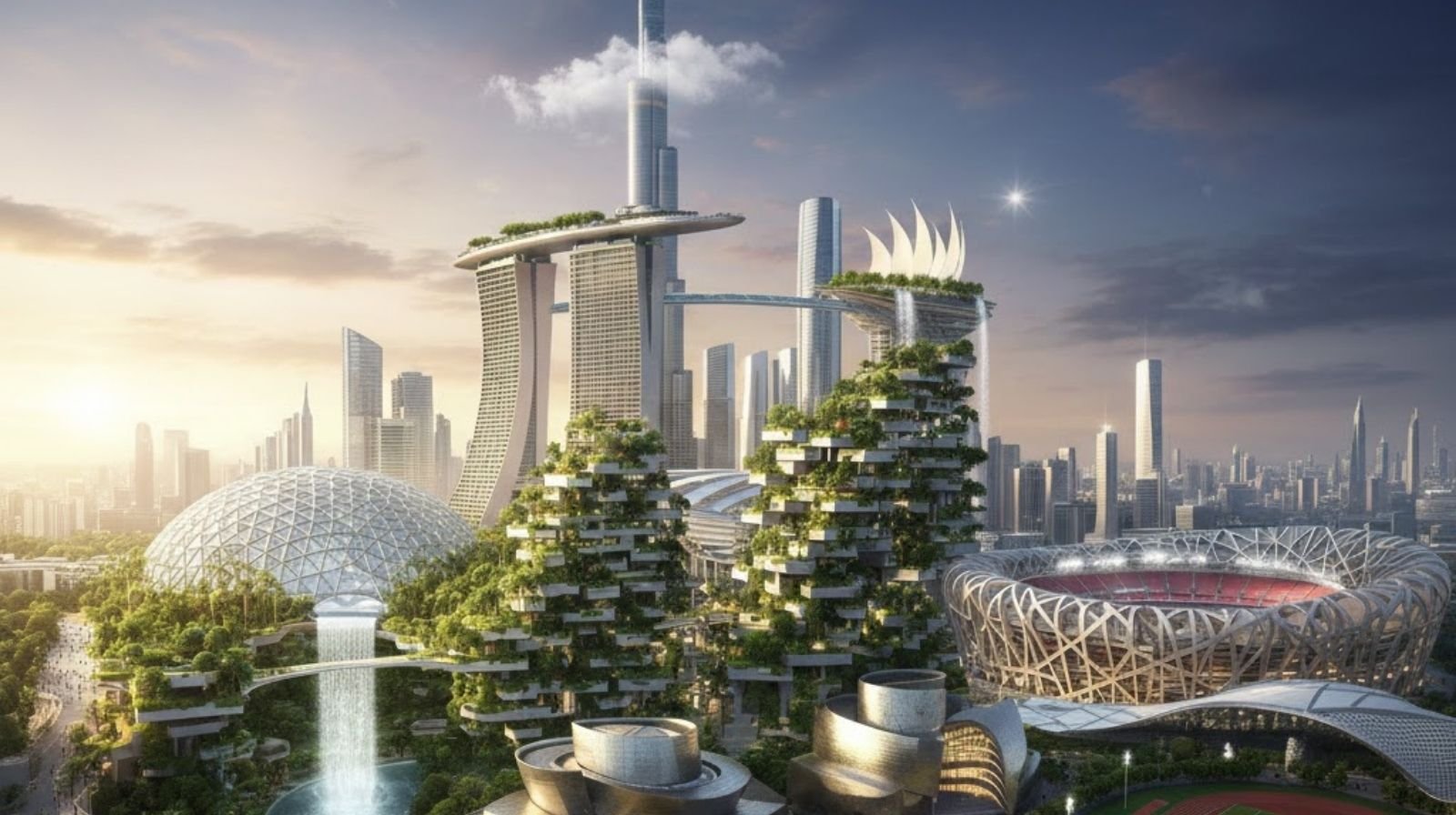
There is a unique kind of vertigo that comes not from height, but from sheer human ambition. It is the feeling of standing in a place that, according to the laws of 19th-century physics, simply should not exist.
As someone who has spent the last decade chasing horizons made of glass, steel, and carbon fiber, I can tell you that the era of “grandeur” has shifted. We are no longer just building high; we are building smart, green, and gravity-defying. In 2026, a building is no longer just a shelter-it is a living organism, a statement of sustainability, and a canvas for light.
I have stood at the needle-tip of the Burj Khalifa, felt the “Rain of Light” under the dome in Abu Dhabi, and walked through vertical forests in Milan. These are not just structures; they are the modern cathedrals of our time. In this guide, I will walk you through the grandiose buildings that you must see at least once in your life-those that will leave an indelible mark on your memory.
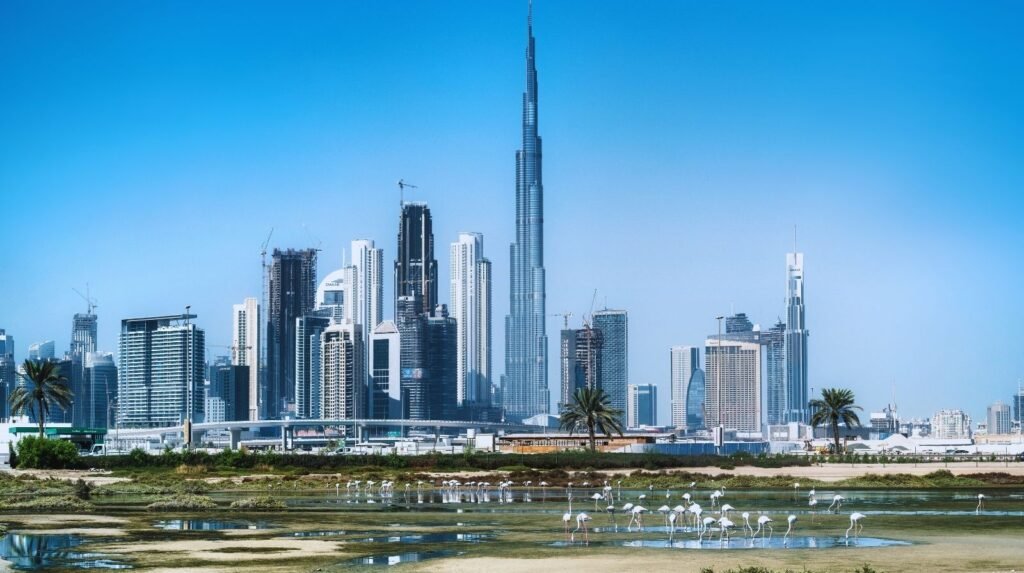
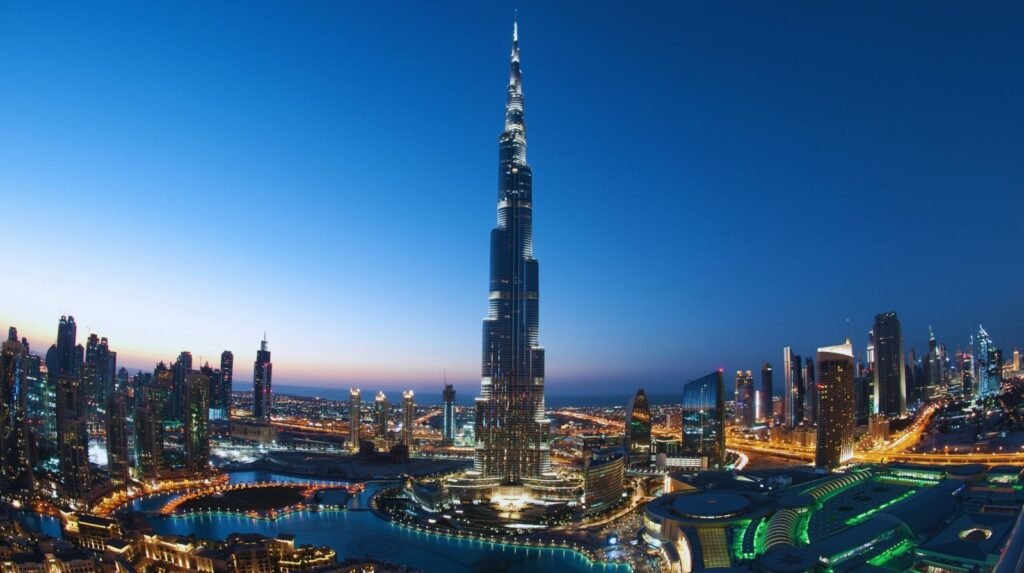
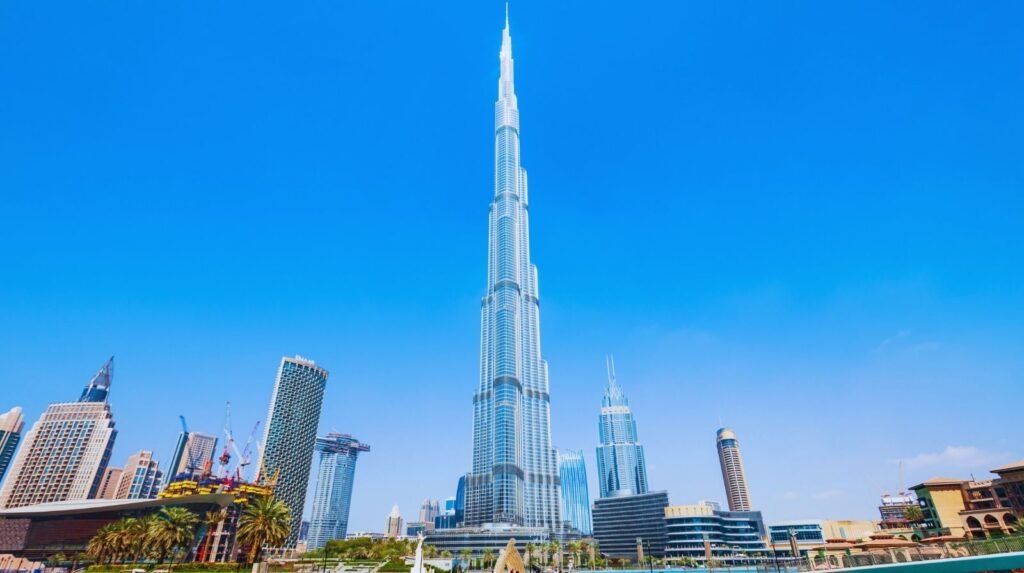
You see it from the airplane window long before you land. It pierces the clouds like a silver needle. But nothing prepares you for standing at its base in Downtown Dubai.
When I first visited the Burj, I expected just another tall building. What I found was a structural masterpiece. The design is inspired by the Hymenocallis desert flower, but the engineering is pure sci-fi.
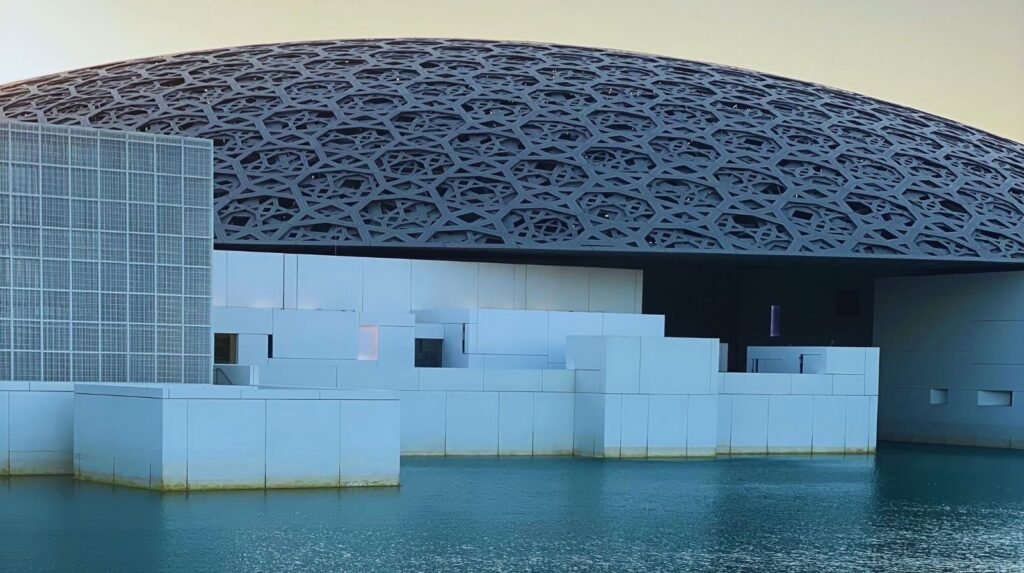
If the Burj Khalifa is a triumph of height, the Louvre Abu Dhabi is a triumph of atmosphere. Designed by Jean Nouvel, it is located on Saadiyat Island.
The center of the experience is the “Rain of Light.” The dome-a massive 180-meter wide structure-is composed of 7,850 unique metal stars in a complex geometric pattern. When the sun passes overhead, it filters through the layers like sunlight through palm leaves in an oasis.
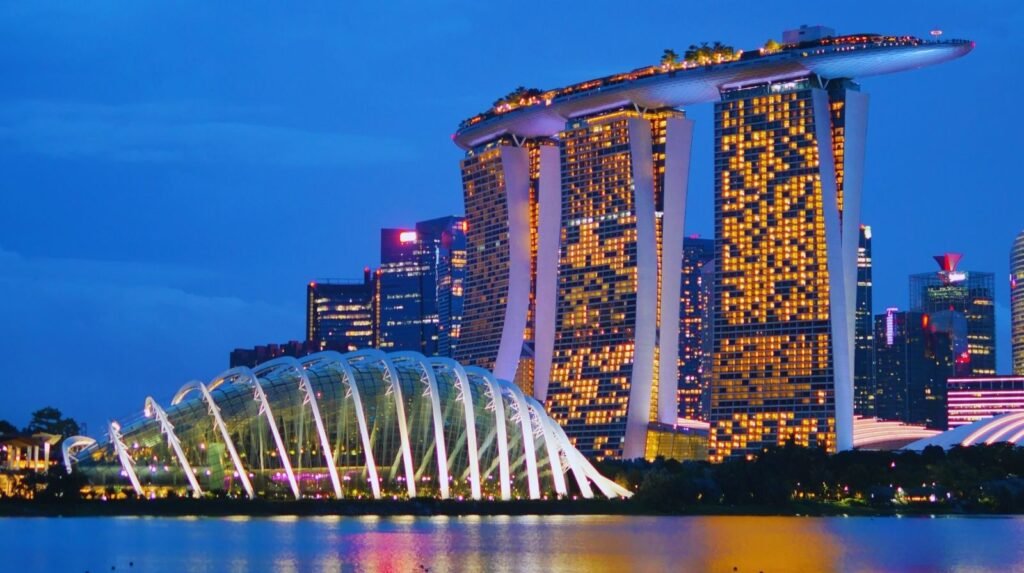
Singapore is the capital of the 22nd century, and Marina Bay Sands (MBS) is its throne. Designed by Moshe Safdie, it consists of three towers topped by a cantilevered platform.
The Infinity Pool on the 57th floor is the most photographed pool in the world for a reason. But beyond the pool, the SkyPark itself is a 340-meter-long engineering feat.
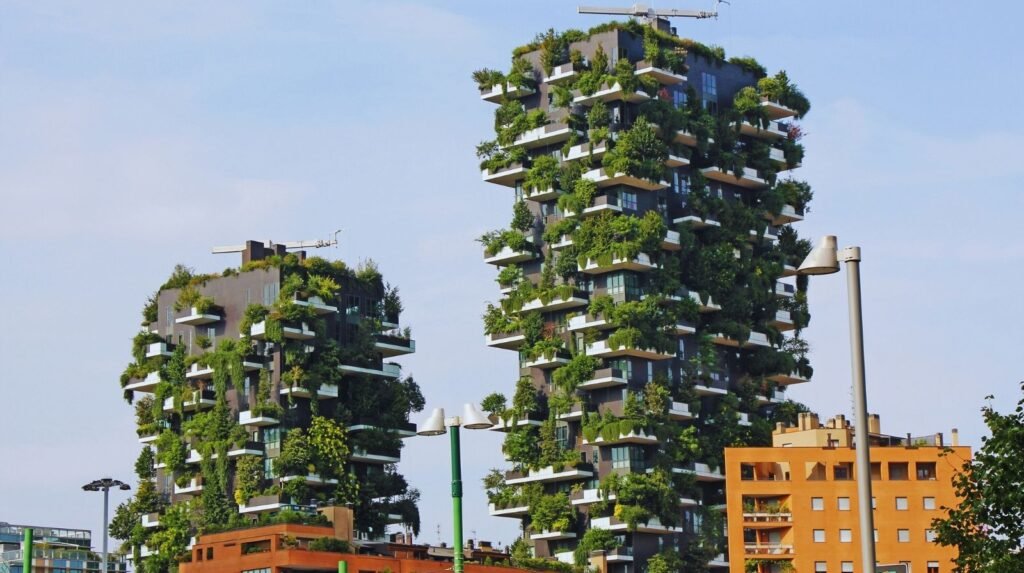
In the heart of Milan’s Porta Nuova district stand two towers that look like they belong in a post-human jungle. This is Stefano Boeri’s Bosco Verticale.
The buildings host 800 trees, 4,500 shrubs, and 15,000 floral plants. It isn’t just decoration; it’s an ecosystem. The plants filter dust, produce oxygen, and mitigate the city’s heat island effect.
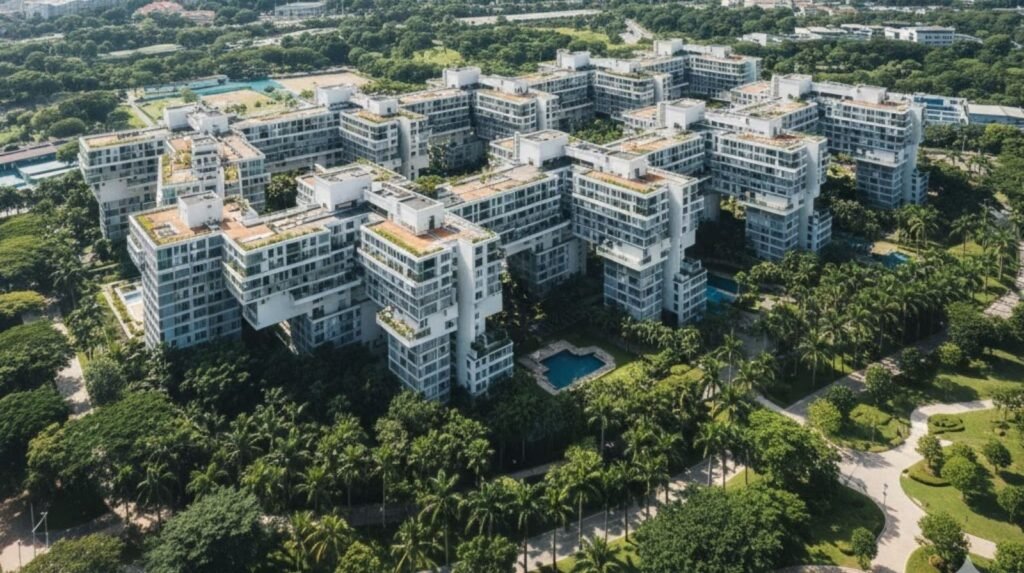
Voted World Building of the Year at one point, Ole Scheeren’s The Interlace breaks every rule of the “apartment block.”
Instead of a cluster of isolated towers, the architect stacked 31 apartment blocks in a hexagonal arrangement. This creates a series of shared gardens, air courtyards, and social spaces.
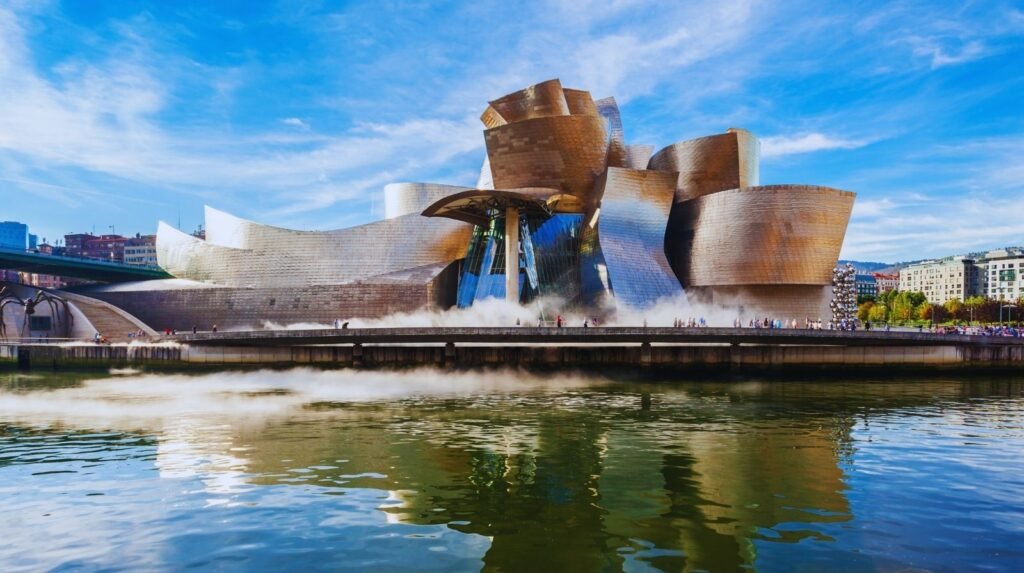
We cannot talk about modern wonders without mentioning Frank Gehry’s masterpiece in Spain. This is the building that gave us the term “The Bilbao Effect”-the idea that a single piece of architecture can revitalize an entire economy.
The building is clad in 33,000 thin titanium sheets that look like fish scales. Depending on the weather, the building turns silver, gold, or deep blue.
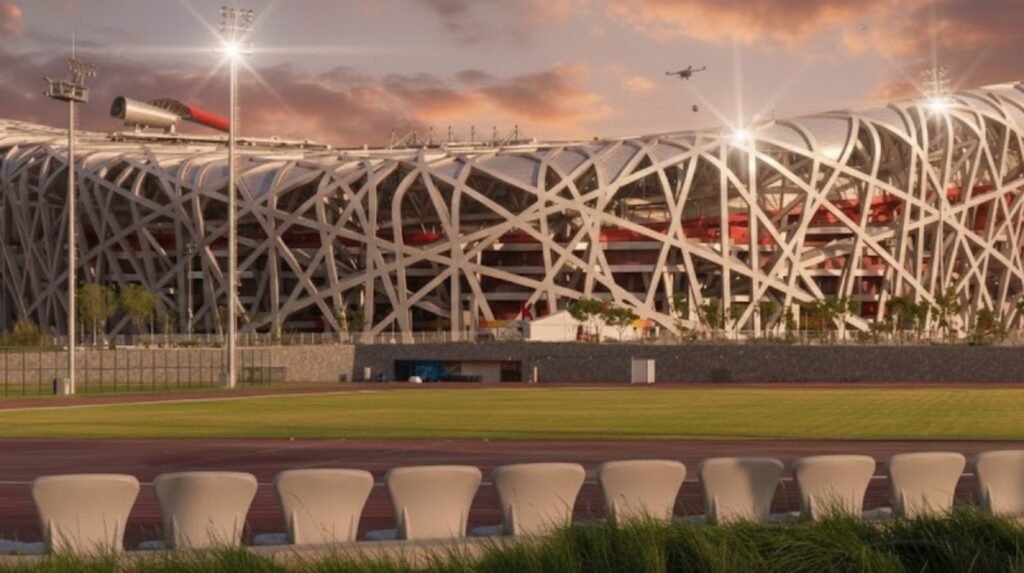
Built for the 2008 Olympics and still iconic in 2026, the Bird’s Nest is the world’s largest steel structure.
The “twigs” of the nest are actually a complex system of 42,000 tons of steel beams. The genius is that the structure supports itself without a single internal column blocking the view of the spectators.
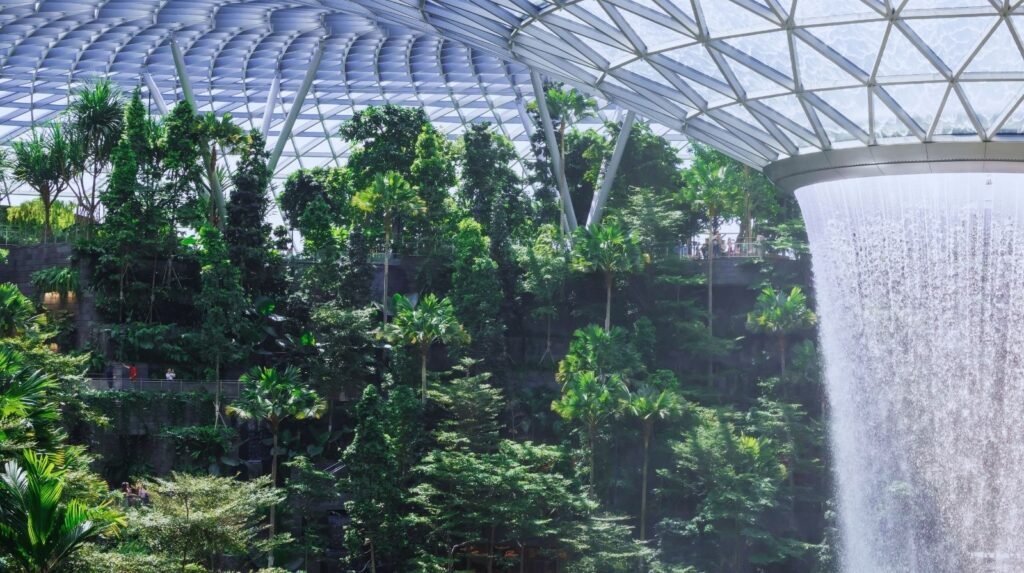
Is it an airport? A shopping mall? A jungle? It’s all three. The Jewel is a glass-and-steel doughnut-shaped complex that connects the terminals.
The centerpiece is the world’s tallest indoor waterfall (40 meters high). The water falls from a hole in the roof, recycled from rainwater. Surrounding it is a five-story tropical forest with 2,000 trees.
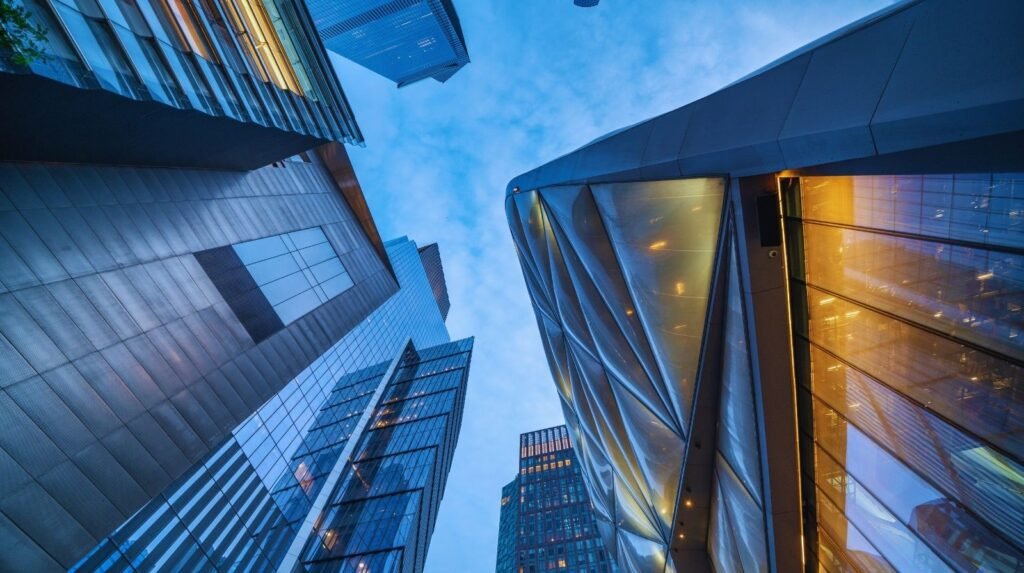
In a city of giants, The Shed stands out because it moves. Designed by Diller Scofidio + Renfro, it is a cultural center with a telescoping outer shell.
The outer “shell” is on a track. When an extra-large space is needed for a concert or exhibition, the shell rolls out, doubling the building’s footprint in minutes.
| Building | Location | Architect | Primary Material | Highlight |
| Burj Khalifa | Dubai, UAE | Adrian Smith (SOM) | Concrete/Steel/Glass | World’s Highest View |
| Louvre Abu Dhabi | Abu Dhabi, UAE | Jean Nouvel | Steel/Aluminum | Rain of Light Effect |
| Marina Bay Sands | Singapore | Moshe Safdie | Steel/Glass | Rooftop Infinity Pool |
| Bosco Verticale | Milan, Italy | Stefano Boeri | Concrete/Plant Life | Urban Biodiversity |
| Guggenheim Bilbao | Bilbao, Spain | Frank Gehry | Titanium/Limestone | Sculptural Fluidity |
| The Jewel | Singapore | Safdie Architects | Glass/Steel/Nature | Indoor Waterfall |
To truly experience these buildings, you need to change how you look. Here are three professional tips for your 2026 architectural world tour:
In 2026, we no longer build grandiose buildings just to show off wealth. We build them to solve problems-the climate crisis, urban loneliness, and the need for beauty in a digital world.
When you stand under the dome of the Louvre Abu Dhabi or look out from the top of the Burj Khalifa, you aren’t just looking at a building. You are looking at a human promise. A promise that we can dream bigger than our limitations, that we can make steel look as light as a feather, and that we can bring forests back to the concrete jungle.
If you are a lover of grandiose structures, let these be your pilgrimage sites. Each one offers a different answer to the question: “What is the future going to look like?”