

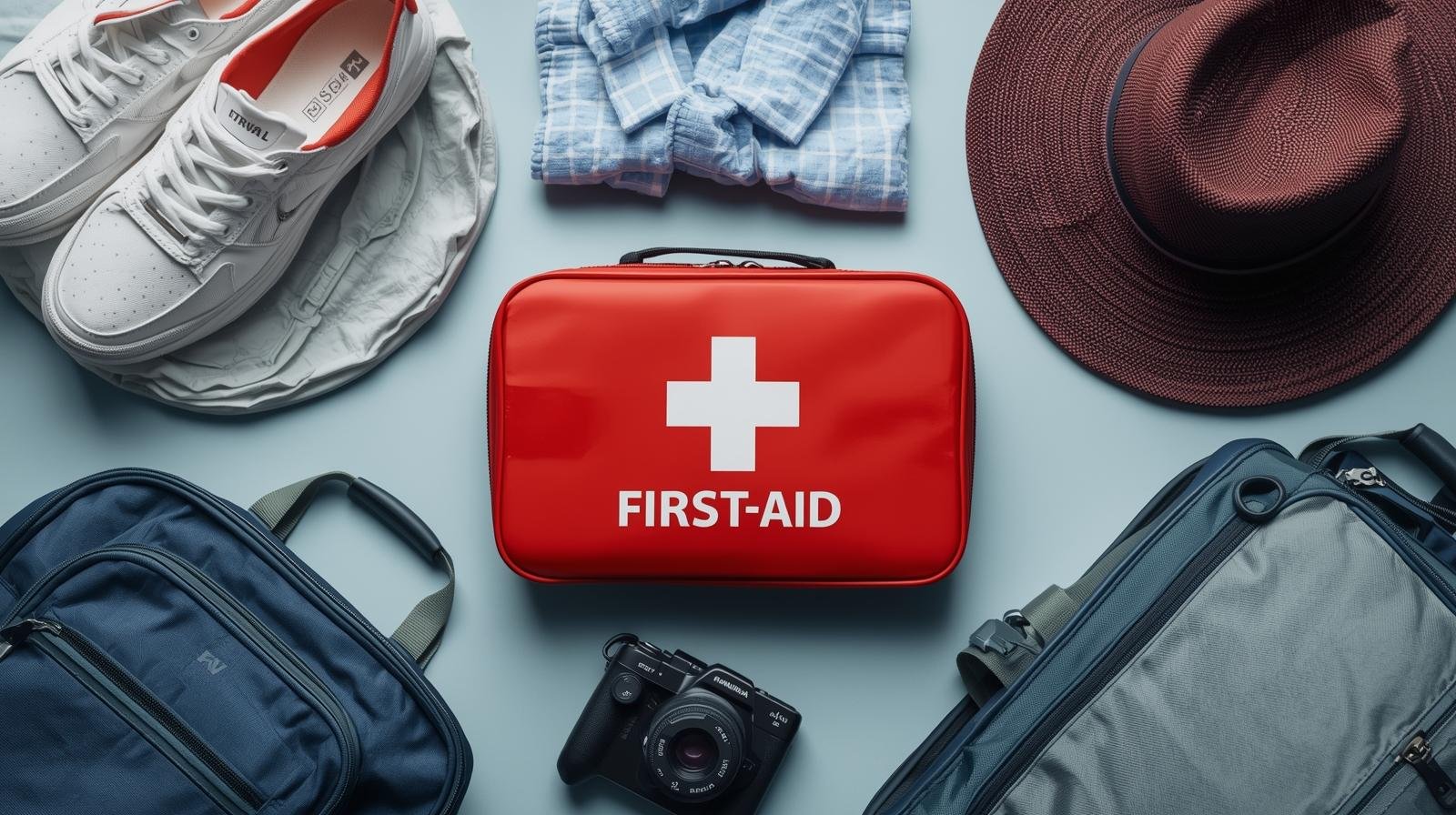
If there’s one thing I’ve learned from backpacking across continents, it’s that a sudden headache, an unexpected blister, or a bout of food poisoning can derail an otherwise perfect day faster than a cancelled flight. Relying on finding a specific foreign pharmacy, translating symptoms, or hoping the local painkiller is the same as your trusted brand? No, thank you!
Your travel medicine kit, or “Travel Pharmacy,” is not dead weight; it’s your portable peace of mind. It’s the essential tool that ensures a minor health hiccup doesn’t turn into a travel disaster.
I’ve meticulously curated my own kit over the years, learning from tropical illnesses and high-altitude woes. Now, I’m sharing my personal, battle-tested blueprint with you. Get ready to pack the smartest, most efficient, and most reassuring first-aid kit imaginable!
The Golden Rule: Prescription Copies and Familiarity
Before we dive into the must-have items, remember this critical first step:
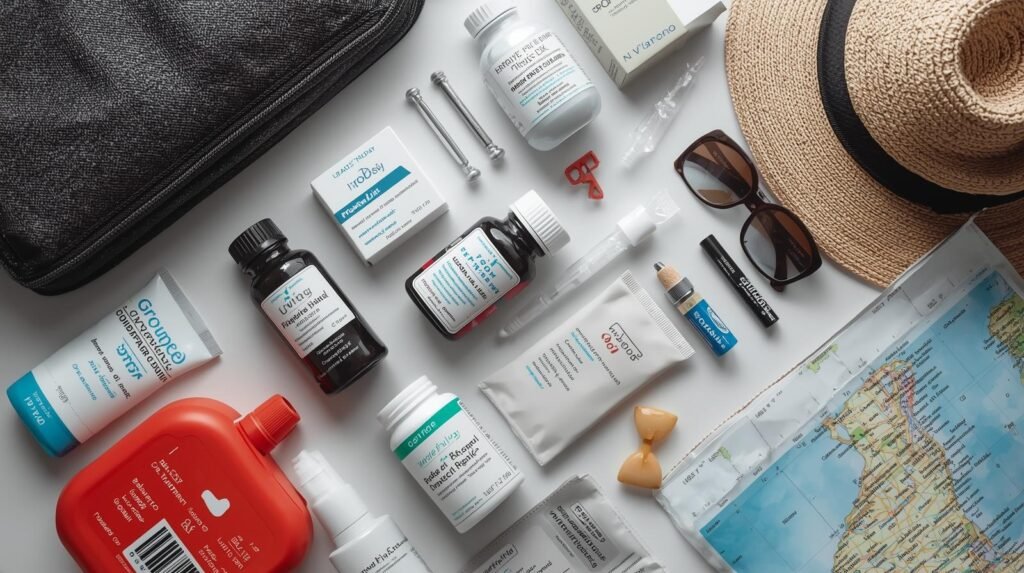
- Prescription Essentials: If you take any regular medication, bring enough for the entire trip plus a few extra days, and keep it in its original packaging with your name clearly visible. CRITICAL: Carry a copy of the prescription itself (or a doctor’s letter) in case customs asks or you need an emergency refill.
- Know Your Brands: Foreign equivalents of common over-the-counter medicines can be confusing. Pack the brands you know and trust. Your stomach already hurts—you don’t need the added stress of deciphering foreign drug names!
1. The Pain, Fever, and Inflammation Fighters
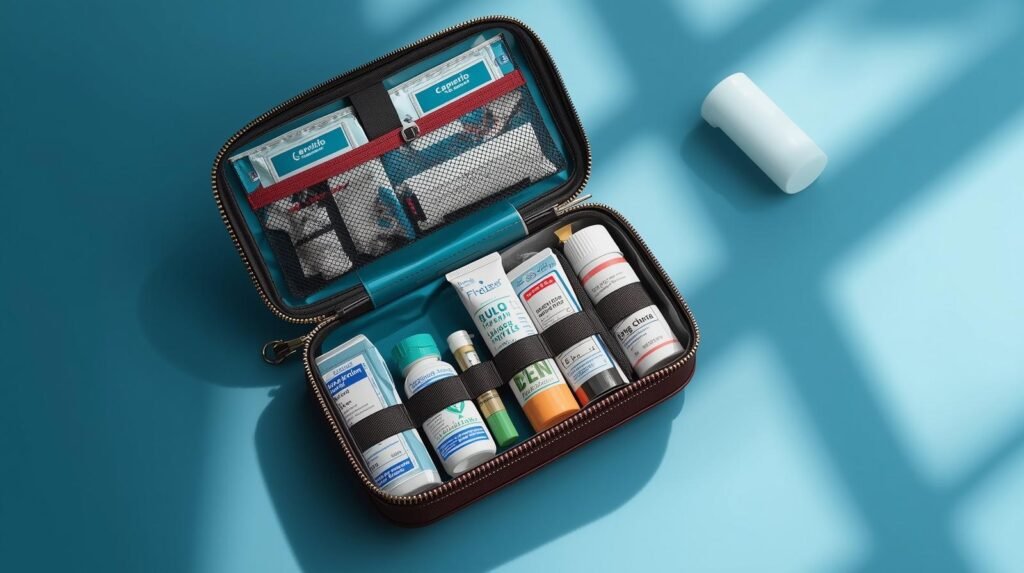
These are the immediate-relief heroes for those common travel discomforts.
| Item Essential | Benefit/Recommended Use | Who Needs This? |
| Ibuprofen / Paracetamol (Acetaminophen) | The dual-action team: Ibuprofen for inflammation (sprains, severe headaches), Paracetamol for pure fever and pain relief. | Everyone! For headaches, muscle aches after long flights/hikes, and fevers. |
| Antihistamines (Non-drowsy) | Allergy relief (pollen, dust, insect bites, food reactions). Crucial for unknown environments. | Essential for those with known allergies, but smart for anyone travelling to new climates. |
| Topical Pain Relief | Small tube of muscle rub (like Voltaren or similar) for soothing stiff necks or back pain after a cramped long-haul flight. | Backpackers and long-haul flyers. |
2. Gastro-Intestinal Guardians: The Stomach Security Team
Travel tummy troubles are the most common complaint. Be ready to conquer them instantly!
- Loperamide (Imodium/Lomotil): The absolute first-aid essential. Used for quickly stopping unexpected, severe diarrhoea. Benefit: Essential for long journeys, bus trips, or flights when a bathroom isn’t easily accessible.
- Technique: Use sparingly! Only when absolutely necessary, as it stops the body from flushing out whatever is causing the issue.
- Probiotics: Start taking a quality probiotic a few days before your trip and continue throughout. Benefit: Helps balance your gut flora and prepare your stomach for new, exciting (and potentially challenging) street food!
- Recommended for: All travellers, especially to areas with unfamiliar cuisine or tap water.
- Antacids (Tums/Rennie): For quick relief from heartburn, indigestion, and the spicy food regrets we all occasionally experience.
- Electrolyte Tablets/Powders: A massive game-changer, especially in hot climates or after an illness. Benefit: Rapidly replenishes essential salts and minerals lost through sweating or illness, preventing dehydration and fatigue.
3. Skin and Wound Care: The External Protection Squad
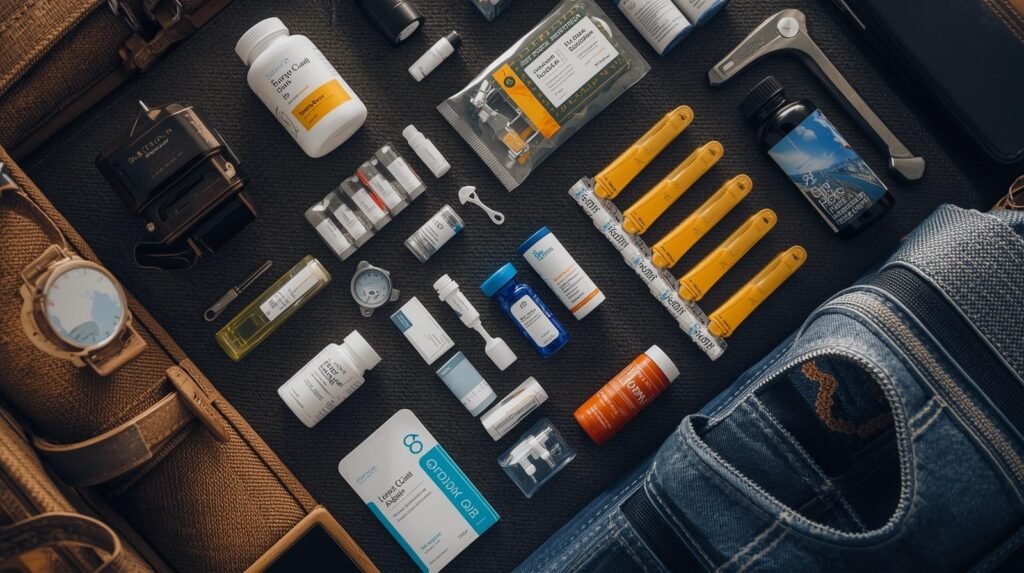
You will get blisters. You will get scraped. Be prepared!
- Assorted Plasters/Band-Aids: Pack various sizes. Crucially, pack some blister plasters (hydrocolloid bandages) – they are thicker, prevent further rubbing, and speed up healing.
- Antiseptic Wipes/Hand Sanitizer: Use consistently. The vast majority of travel illness starts with dirty hands.
- Topical Antiseptic Cream: For cleaning and preventing infection in minor cuts or insect bites.
- Insect Repellent and Anti-Itch Cream: A powerful repellent is mandatory for any tropical region. Pack a soothing anti-itch cream (hydrocortisone or calamine) for those bites that sneak through.
- Small Tweezers: For splinters, tick removal, or getting that tiny hair out of your eye. Always choose a good quality, pointed pair.
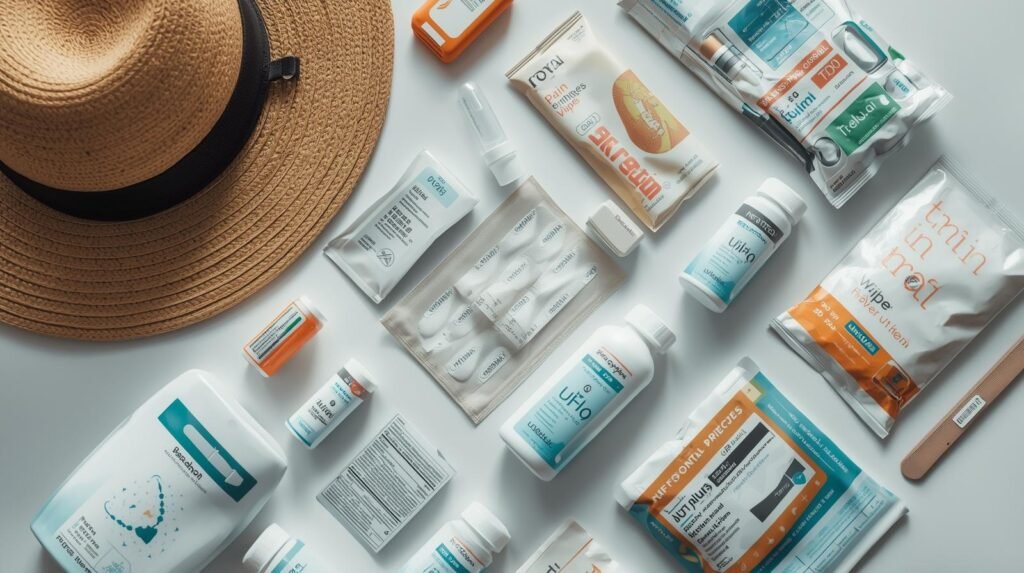
4. Packing Like a Pro: The Organization Technique
Your pharmacy shouldn’t be a mess of bottles and boxes!
Technique Spotlight: The “Clear Pouch” System
- What it is: Use a small, durable, and transparent toiletry bag or pouch.
- The Benefit: Visibility! You can instantly see where everything is, which is crucial when you’re feeling ill or rushed. Also, if you’ve packed liquids, a clear bag is a requirement for airport security.
- Recommended for: Everyone. Keeps small pills and tubes contained and away from your clothes.
Technique Spotlight: Ditch the Boxes
- What it is: Remove medications from their bulky cardboard packaging and flatten the box instructions/leaflets. Keep the pills themselves in the blister packs.
- The Benefit: Saves immense space and weight! Flattened instructions can be tucked into the clear pouch for dosage reference. Warning: Keep your prescription meds in their original bottle if customs is likely to be an issue.
Trust your gut, pack smart, and know that you are fully equipped to handle whatever the world throws at you. Safe travels, and may your adventures be perfectly healthy!
Don’t forget to include the link if you share this post!